
Hawkhurst is around sixteen minutes from our Biddenden yard, and the roofing work we're called out for most often is tied to the town's tile-hung Victorian villas around The Moor and Highgate, where vertical tile hanging on gable and upper-storey walls behaves differently to a standard roof slope.
The town's position straddling the boundary between Tunbridge Wells Borough Council and Rother District Council in East Sussex means the correct planning authority isn't always obvious from the postcode alone, so we confirm it before submitting anything.
Vertical tile hanging, not just roof coverings
A distinctive feature of Hawkhurst's Victorian villas is tile hanging on vertical wall elevations, usually on upper storeys and gable ends, using the same small clay tiles found on the roof slopes but fixed to a batten and counter-batten arrangement on the wall face rather than a roof deck. Repairs here need the tiles cut and fitted around window reveals and corners in a way that roof-slope tiling never has to deal with.
Where tiles have slipped from vertical hanging, the cause is often failed nibs or corroded nails rather than anything wrong with the wall behind, and a competent repair replaces the fixing method rather than just the visible tile.
Two planning authorities on one high street
Properties in the historic centre around The Moor and the Colonnade typically fall under Tunbridge Wells Borough Council, while some addresses towards Gills Green and the Sussex-facing edges of the parish sit within Rother District Council. Conservation area boundaries, consent requirements and the specific planning officer contacts differ between the two authorities, so we check the correct authority against the property address rather than assuming based on postcode.
This matters practically because response times and pre-application advice availability differ between the two councils, and building a realistic programme means knowing which one applies before quoting a start date.
Exposure on higher ground
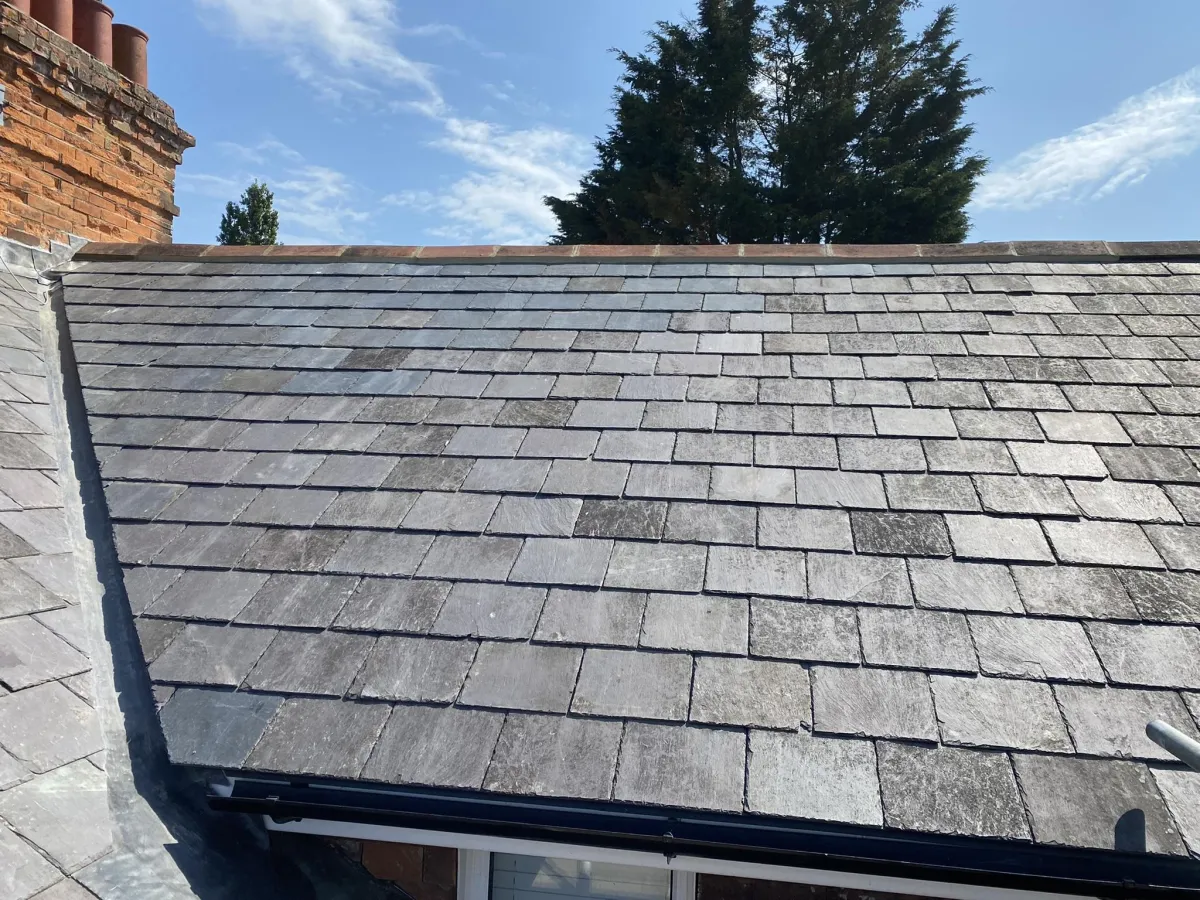
Hawkhurst sits on relatively high ground compared with the sheltered valley villages nearby, and roofs here take more direct wind-driven rain, particularly on west-facing slopes. This affects detailing choices — we specify a slightly more generous head lap on re-slated roofs than the bare minimum, and pay particular attention to mortar bedding at ridges and hips, since a marginal detail that would survive in a sheltered village setting is more likely to fail here.
Gutters and rainwater goods on the more exposed elevations also see heavier flows in storms, so oversized or additional outlets are sometimes worth specifying on a full re-roof rather than replacing like-for-like with an undersized original system.
Mixed housing stock, mixed roof ages
Alongside the tile-hung Victorian villas, Hawkhurst has a good stock of mid-century semis and post-war bungalows around the edges of the settlement, generally with simpler concrete tile or slate roofs and none of the vertical hanging complexity. These properties are usually more straightforward re-roofs, with the main technical decision being felt versus breathable membrane underlay and whether the original timber battens need replacing.
Knowing which category a property falls into before survey lets us give an accurate estimate of both cost and consent requirements over the phone, rather than needing to attend before giving any indication at all.
Scaffold on sloped and constrained plots
A number of properties around Highgate Hill and Rye Road sit on sloping plots where standard scaffold footings need adjusting for level changes, and narrow lanes limit where a scaffold wagon can park to load. We survey access as part of the initial visit so the scaffold design and delivery plan are settled before a start date is confirmed.
Common questions
Do I need Tunbridge Wells or Rother District for planning consent in Hawkhurst?+
It depends on exactly where the property sits — most of the historic centre falls under Tunbridge Wells Borough Council, while some addresses towards the Sussex border fall under Rother District Council. We confirm the correct authority against your specific address before submitting anything.
Why do my tile-hung walls keep losing tiles?+
Vertical tile hanging relies on nibs and nails or clips holding each tile to the batten, and these fixings corrode or fatigue over time, particularly on more exposed elevations. It's rarely the wall structure at fault — a proper repair replaces the fixing method, not just the tile.
Is Hawkhurst's roofing more exposed to weather than nearby villages?+
Hawkhurst sits on higher ground than some of the sheltered Weald valleys, so west-facing roof slopes take more direct wind-driven rain. We allow for this with slightly more generous detailing at head laps, ridges and hips on full re-roofs.
Get a roofing quote for your Hawkhurst property
Free survey covering the roof, any vertical tile hanging and the correct planning authority, with a written quote to follow.