
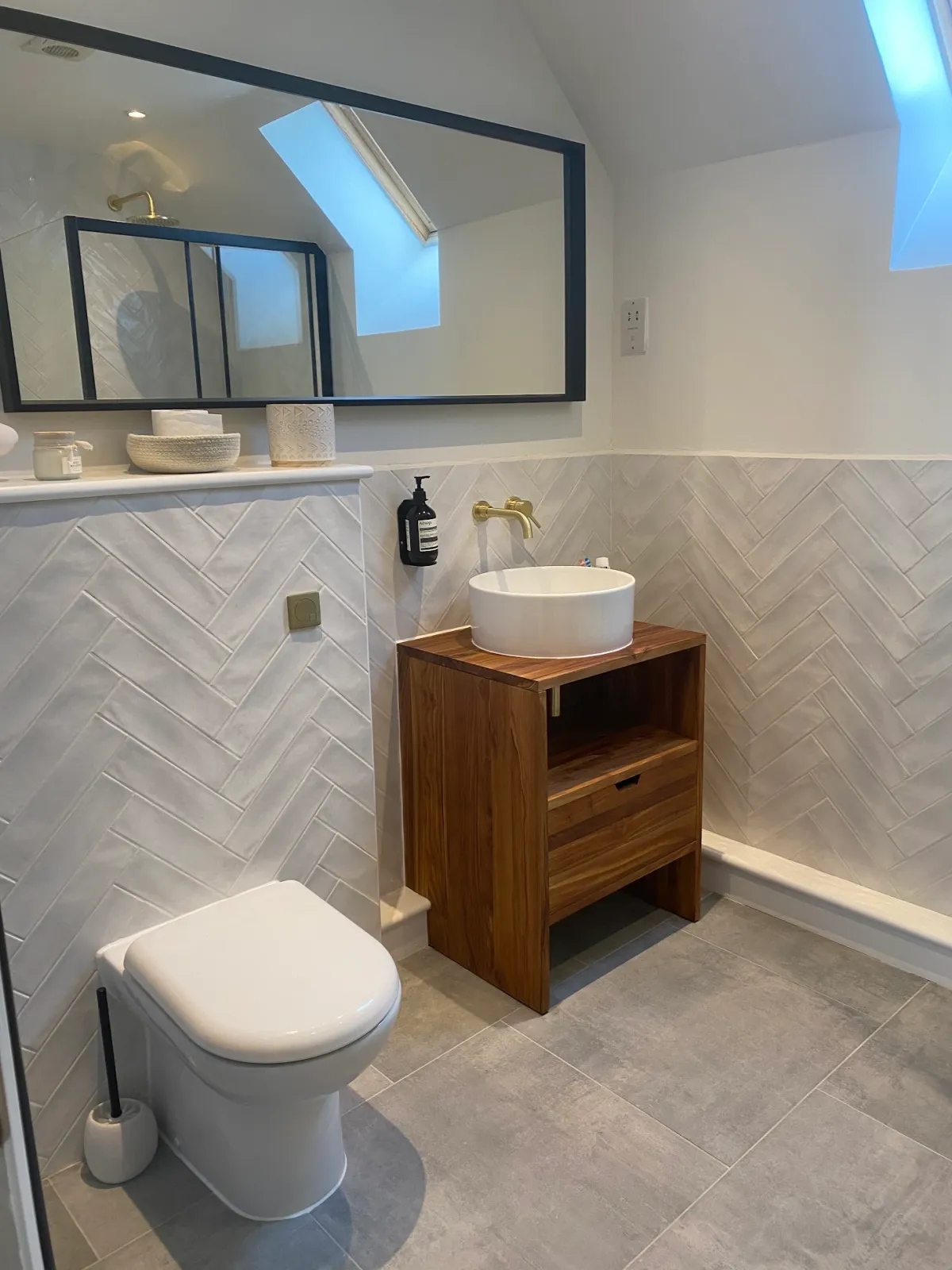
The constraint that drives everything is the booking calendar. Work either fits a defined closed window or it does not happen.
Working to a fixed window
We plan holiday let work backwards from the reopening date, with materials on site before the first day and a clear decision point on anything that could overrun.
Shoulder-season windows are short, so scopes that need drying time — screeds, plaster, tanking, lime work — need to be identified early and either accommodated or deferred.
What guests actually notice
Showers with real pressure, hot water that keeps up with a full house, quiet bedrooms, good lighting and enough storage for suitcases and coats. These come up in reviews far more than finishes do.
Durable, cleanable surfaces and hardware that survives heavy handling protect both the review score and your maintenance budget.
Safety and compliance
Fire detection and escape provision, secure and compliant electrics, and safe heating and hot water systems all need to be right in a let property, and requirements can be more demanding than for a private home.
It is worth having these confirmed by the appropriate specialists as part of the refurbishment rather than reacting to a later inspection.
Common questions
Can you work around bookings?
Yes, provided there is a defined closed window and the scope realistically fits it. We plan procurement so nothing waits on a delivery mid-window.
What should I prioritise in a holiday let?
Bathrooms, hot water performance, sleep quality and storage. Those drive reviews far more than decorative upgrades.
Are the safety rules different from a normal home?
Requirements for let accommodation are generally more demanding, particularly around fire detection and escape, so they should be checked with the relevant specialists.
How do I avoid overrunning into a booking?
Fix the scope early, get long-lead items on site before day one, and agree a cut-off date beyond which optional extras are deferred.