
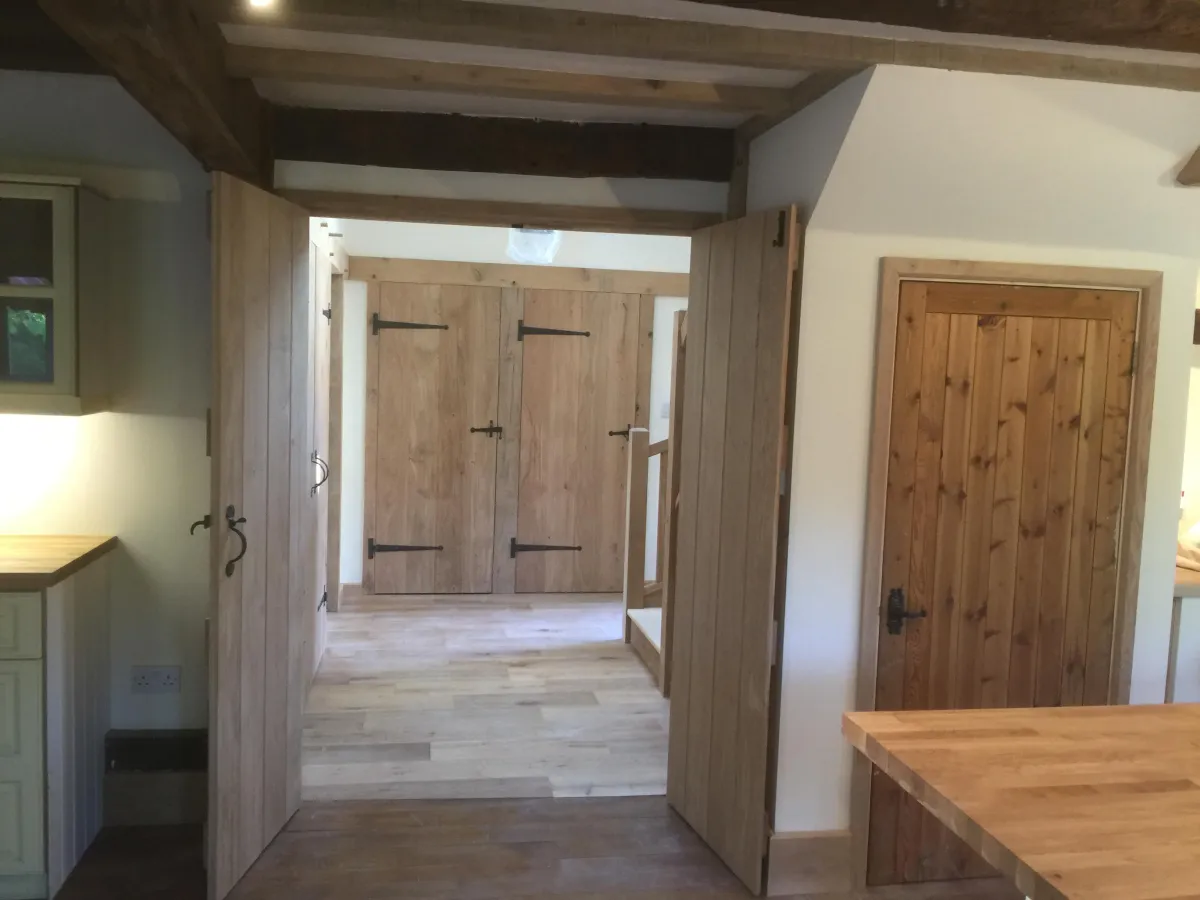
Where the grain is on show, or where the joinery is exposed to weather and wear, the material choice starts to matter a great deal.
Where softwood is the right answer
Painted internal joinery — skirtings, architraves, linings, painted wardrobes and most fitted furniture carcassing — is well served by a good grade of engineered or slow-grown softwood. It machines cleanly, holds paint, and costs a fraction of hardwood.
Engineered sections, laminated from several pieces, stay straighter than solid boards and are the sensible choice for long runs and door linings.
Where oak pays for itself
Anything with visible grain: staircases, structural posts and beams, worktops, feature doors, window boards and external doors that will be oiled rather than painted.
Oak also handles wear and impact better, which matters on stair treads, thresholds and handrails that get daily use for decades.
Movement, finish and practicalities
Oak moves as it acclimatises and reacts with ferrous fixings, so it needs stainless or brass ironmongery and time in the room before final fitting. Softwood is more forgiving but more prone to dents.
Finish matters as much as species. An oiled oak surface needs occasional maintenance; a well-prepared paint system on softwood can go many years untouched indoors.
Common questions
Is oak worth the extra cost?
Where the grain is visible or the surface takes heavy wear, yes. Under paint, the visual benefit disappears and engineered softwood usually makes more sense.
Does oak crack?
Solid oak checks slightly as it acclimatises, particularly in heated rooms. Quarter-sawn and kiln-dried stock reduces it, and small movement is part of the character.
Can softwood be used externally?
Yes, with a durable grade, correct detailing to shed water and a maintained paint system. Exposed positions favour a durable hardwood.
What about oak-veneered products?
Veneered boards give a stable, consistent face for large panels and carcasses. They are a good match with solid oak edges and rails for fitted furniture.