
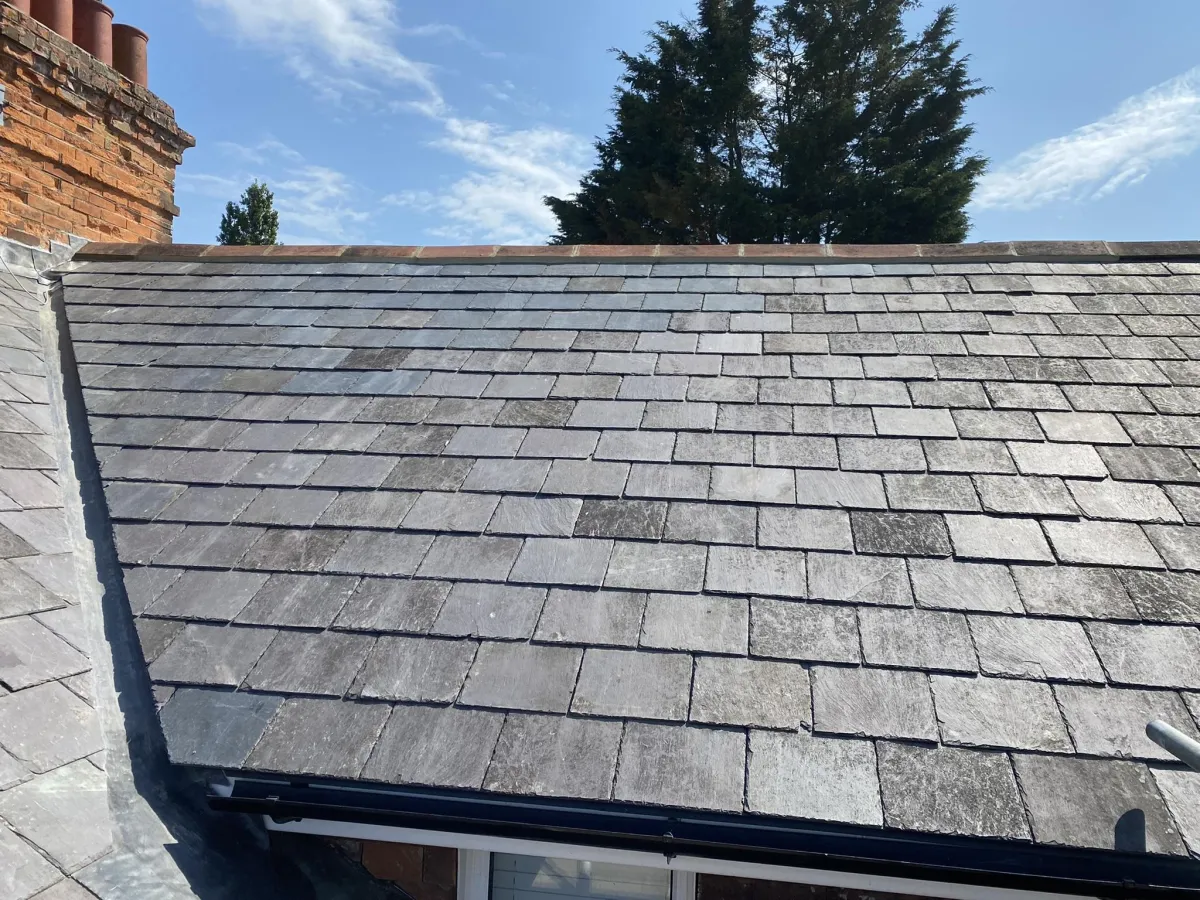
The other difference shows up over time: clay holds its colour, while pigmented concrete fades and can grow moss on its surface.
Weight and structure
If the roof was designed for a lighter covering, moving to a heavier one needs the structure checking. Going the other way is usually straightforward but may change batten gauge and fixing requirements.
This is one of the checks we make before quoting a re-roof rather than after stripping, because it changes the scope materially.
Appearance over the years
Clay weathers rather than fades. It develops a patina and blends with older neighbouring roofs, which is why conservation areas usually want clay, and often hand-made or hand-made-effect tiles or Kent peg tiles on the right buildings.
Concrete tiles start uniform and lose surface colour over a decade or two. On a modern estate that is entirely normal; on a period elevation it looks wrong quickly.
Cost and lifespan
Concrete is cheaper per square metre and widely available. Clay costs more and takes longer to source in matching profiles, particularly for repairs to older roofs.
Both will outlast their fixings and battens if the roof is detailed well, which is why the underlay, batten grade and fixing specification deserve as much attention as the tile.
Common questions
Can I replace concrete tiles with clay?
Usually yes, and it often reduces the load. The batten gauge, fixing pattern and verge details all change with the tile, so it is a full specification decision.
Do clay tiles last longer?
Clay holds its appearance longer. Both materials commonly outlast the battens and fixings beneath them, which is why re-roofs replace those too.
Why is my roof covered in moss?
Moss favours the textured surface of weathered concrete on shaded elevations. It is largely cosmetic until it blocks gutters or lifts tiles.
Do I need planning permission to change tile type?
Not normally on an unlisted house outside a conservation area, but designated areas and Article 4 directions can require consent for a change in appearance.