
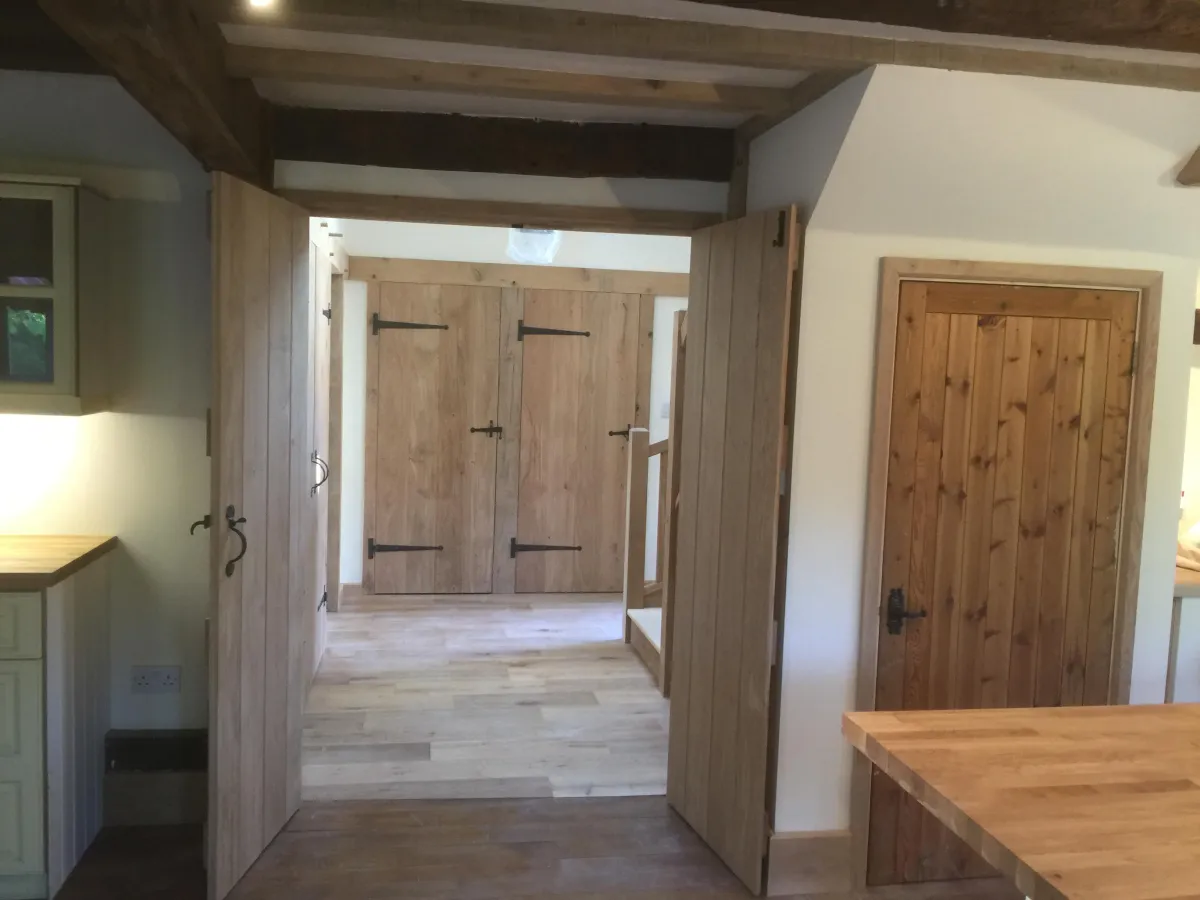
The words carpenter and joiner are often used interchangeably. Traditionally a joiner makes things in a workshop, such as doors, windows and cabinets, while a carpenter fits timber on site, such as floors, roofs and frames. Many firms, including ours, do both.
First fix and second fix carpentry
First fix is the structural and hidden timberwork done before plastering: floor joists, stud walls, roof timbers, door linings and window boards. Second fix comes after plastering: hanging doors, fitting skirting and architrave, ironmongery, staircases and built in cupboards. On a building project both stages are usually needed, and having one team do both keeps the lines and levels consistent.
Bespoke joinery versus flat pack
Made to measure furniture fills alcoves, sloping ceilings and under stair spaces that off the shelf units never fit properly. It is built to the room, often scribed to uneven walls and floors in older houses, and finished to match existing joinery. A workshop is what makes this possible, because pieces can be made accurately and then installed quickly on site.
- Fitted wardrobes and alcove cupboards
- Under stairs storage and loft angled furniture
- Staircases, balustrades and handrails
- Internal doors, frames and period mouldings
- Kitchens and media walls
Questions to ask before hiring
Ask whether they have done work like yours before and can show examples. Ask who will actually do the work. Ask whether the price is fixed and in writing, what it includes, and how changes will be priced. For bespoke pieces, ask about timber, finish, hinges and runners, since those decide how the piece wears over the years.
Period houses need a different eye
Older homes rarely have square walls or level floors, and original joinery is often worth repairing rather than replacing. Matching a moulding profile, splicing a sash window or easing a sticking door without spoiling its character takes experience with traditional timberwork.
Why local matters
A carpenter based nearby can visit to measure, return for fitting and come back for adjustments without it becoming a major trip. It also means they know the local building types, from weatherboarded cottages to modern estate houses.
How bespoke pieces are made and fitted
A bespoke job starts with a measured visit, including the slope of ceilings, the line of skirting and any out of level floors. Drawings or sketches then agree sizes, door styles, internal layout and finish before anything is cut.
The pieces are made and finished in the workshop, which keeps dust and noise in the house to a minimum. On site they are scribed to the walls and floor, fixed securely and adjusted so doors and drawers run evenly. Final tweaks are normal once the timber has settled into the room, and a good carpenter will come back to make them.
About our carpenters
Tembok Carpenter & Building Services has more than 40 years of carpentry and building experience, with a workshop at Biddenden where bespoke pieces are made. We offer a free site visit to measure and discuss the job, followed by a fixed-price written quote.
Common questions
What is the difference between a carpenter and a joiner?
Traditionally a joiner makes items in a workshop and a carpenter fits timber on site. Many firms, including ours, do both.
What does second fix carpentry include?
Work after plastering: hanging doors, skirting and architrave, ironmongery, staircases and built in furniture.
Do you make bespoke furniture?
Yes. Made to measure pieces are built in our Biddenden workshop and fitted by our own carpenters.
How do I find a good carpenter near me?
Look for someone local who does your type of work, can show examples, will visit to measure and gives a clear written price before starting.
Do you take on small carpentry jobs?
Yes. Our carpenters handle joinery repairs and fitting as well as larger projects.
Do you give a fixed price?
Yes. After a free site visit we provide a fixed-price written quote.