
Tembok Carpenter & Building Services
Internal doors fitting
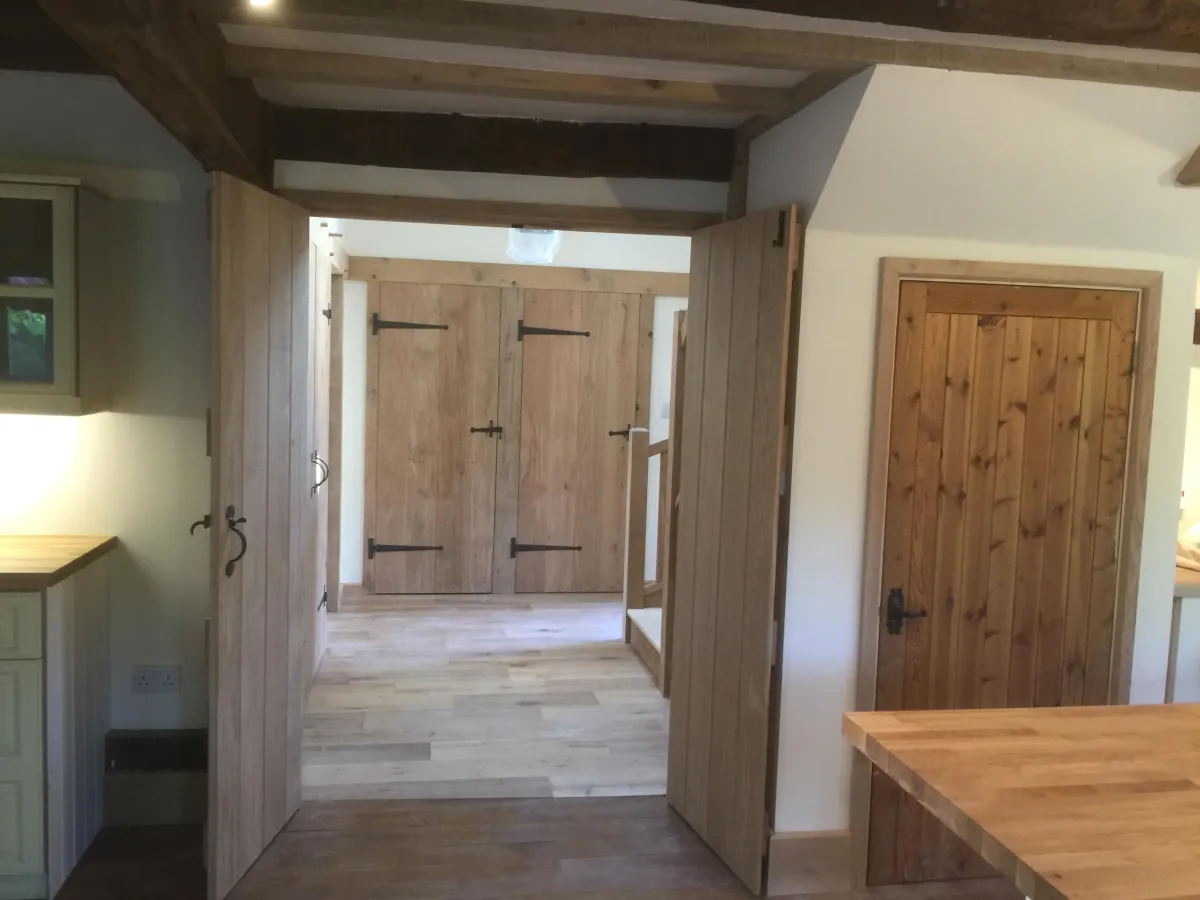
Internal doors fitting well depends on more than the door itself. The frame or lining, the floor finish, the hinges and the latch all need to work together so the door closes cleanly, clears the floor and keeps an even gap around its edges.
What an internal door fitter does
Hanging a door starts with checking the opening. Older houses rarely have square frames, and floors may slope, so the door is trimmed to suit the actual opening rather than a nominal size. Hinges are recessed into the door and frame, the latch and keep are fitted, and the edges are planed to give a consistent gap. A carpenter will usually seal any cut edges so the door does not absorb moisture through bare timber.
Where the existing lining is damaged, out of square or the wrong size for the new door, it may be better to replace it, along with the architraves. This is common when changing from standard to wider doors, or when walls have been altered during a renovation. Skirting and decoration around the opening may need making good, so it is worth clarifying what is included in the quote.
Choosing doors and ironmongery
Internal doors come in a wide range of styles and constructions, from hollow-core and solid-core doors to panelled timber and glazed designs. Heavier doors need suitable hinges, often three rather than two, and a stronger lining. Glazed doors bring light into a hall but need safety glass. Choose handles and latches together so their sizes match, and consider whether you need a privacy lock on bathroom doors.
Fire doors have specific requirements. In a loft conversion or a house with three or more storeys, doors on the escape route may need to be fire-rated, and they must be fitted with the correct hinges, intumescent seals and gaps to perform as designed. A fire door that has been trimmed too much or fitted with the wrong ironmongery may not meet its rating, so it should be installed in line with the manufacturer’s instructions.
Period doors, sticking doors and new floors
In older homes, it is often worth keeping original panelled doors rather than replacing them. A sticking or sagging door may need loose hinges refixed, a joint tightened or an edge eased rather than a new door. Where a period door has been badly cut down or damaged, a joiner can sometimes repair it or make a replacement to match the others in the house, which suits a workshop-based approach.
New flooring is a common reason to rehang doors. Thicker carpet, engineered boards or tiles can leave a door catching on the floor, so the bottom edge is trimmed after the floor is laid. Tembok offers a free site visit to look at the doors, frames and floors involved, followed by a written quote that sets out each opening and what is included.
Internal Door Fitting — frequently asked
Can new doors be fitted into existing frames?
Often, if the frame is sound and close to the right size. Out-of-square or damaged linings may need adjusting or replacing so the door closes properly.
Why does my internal door stick?
Loose hinges, swelling from moisture, movement in the frame or a new floor finish are common causes. Identifying which one applies decides whether an adjustment or a new door is needed.
Do fire doors need special fitting?
Yes. Fire doors must be fitted with suitable hinges, seals and gaps, and only trimmed within the manufacturer’s limits, to keep their fire rating.
Should I replace or repair period doors?
Original panelled doors are often worth repairing. A joiner can ease, refix or repair them, and make a matching replacement where a door is beyond repair.
Useful reading
Let's Talk
Ready to Get Started?
Get in touch for a free, no-obligation quote on your next project.