
Quartz worktops are made from crushed natural quartz, one of the hardest common minerals, bound together with a polyester resin under pressure. The result is an engineered slab that behaves far more predictably than a natural stone like granite or marble.
It's become the default worktop material in a lot of new kitchens across Kent because it removes several of the compromises homeowners used to have to accept with natural stone or timber.
What's in the slab
A typical quartz worktop is roughly 90% ground quartz aggregate and 10% resin binder, along with pigments that give the colour and pattern. The high mineral content is what makes it so hard-wearing.
Because it's manufactured rather than quarried, the pattern repeats consistently across the slab and between slabs from the same batch — a genuinely different look from the one-off veining of natural stone.
Where it belongs
Busy family kitchens are the obvious fit: quartz doesn't need sealing, resists staining from wine, oil and food acids far better than granite, and shrugs off the daily knocks of a working kitchen.
It also suits kitchens where consistency matters more than natural variation — if a client wants every visible worktop run to look identical, quartz delivers that in a way natural stone can't guarantee.
Where it's the wrong call, and what we specify instead
Directly beside a range cooker or in a spot where hot pans routinely get set down without a trivet, quartz is a poor choice — the resin binder can discolour or crack under sustained heat in a way solid granite or a heat-tolerant timber surface handles better. We'll usually specify granite or a dedicated heat-resistant zone next to a range.
Anywhere the brief is a warm, natural, characterful worktop with visible grain or one-off veining, quartz's manufactured consistency works against the brief — solid timber or a genuine natural stone slab suits that better.
Outdoor or unheated garden-room use is another mismatch; sustained UV exposure can fade quartz pigment over time, so we specify porcelain or a UV-stable material for those spots instead.
Slab format, joins and templating
Quartz is supplied in fixed slab sizes, typically around 3200mm by 1600mm, so any run longer than that needs a joint — the question at design stage is where that joint falls, not whether one exists. A good fabricator will plan joins to land away from the sink or hob wherever the layout allows.
Because quartz doesn't flex like timber, the kitchen has to be templated after the cabinets are fixed and level, using a digital or card template taken on site, rather than working from drawing dimensions alone. Cutting the slab before the cabinets are finished and true is one of the more common causes of a worktop that doesn't sit flush.
Visible joints are filled with a colour-matched resin and polished flush, and on a well-fitted worktop they're felt more than seen; a poorly matched or rushed join is one of the clearer signs of a cut-price install.
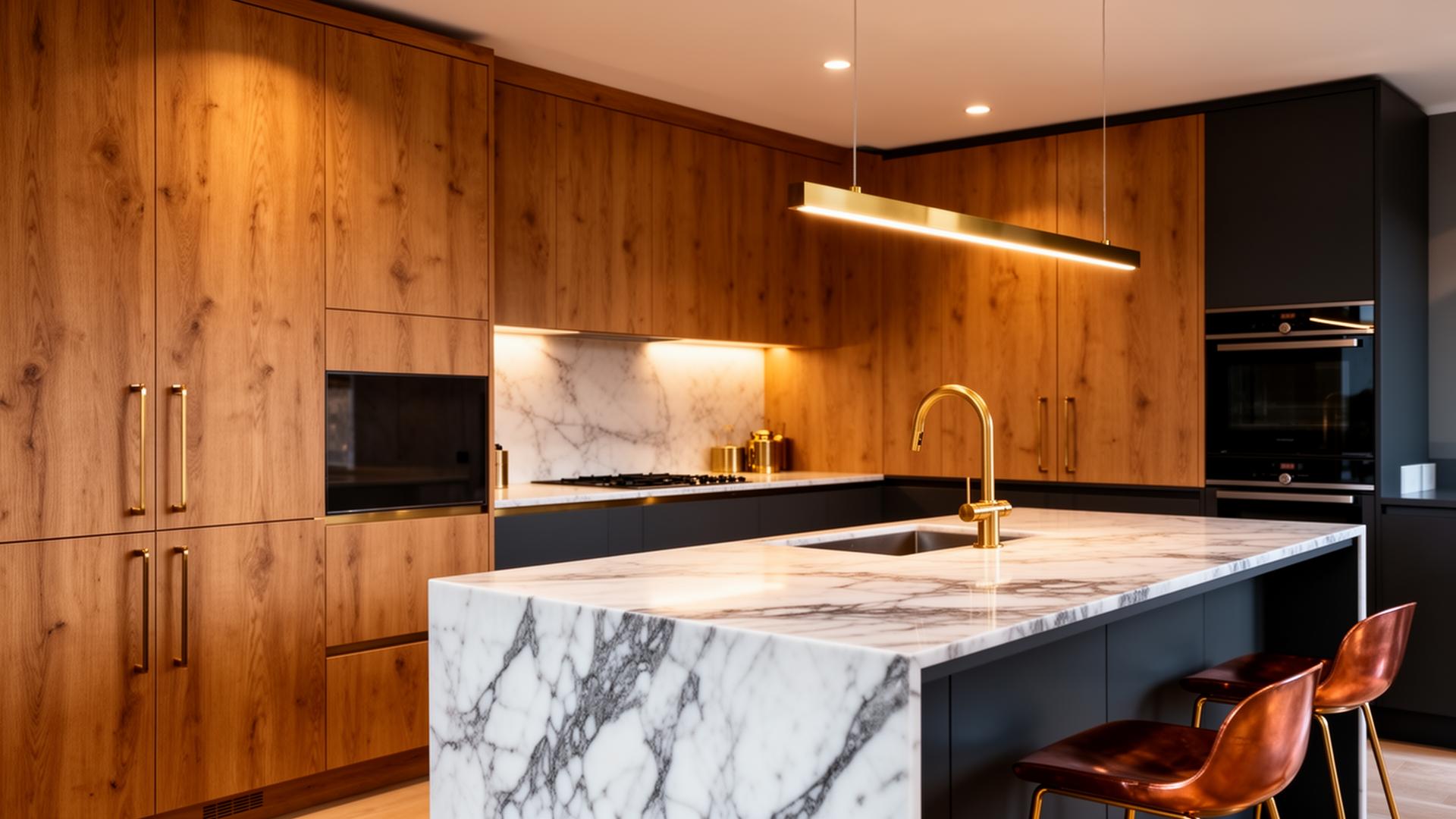
Common questions
Is quartz better than granite?+
Neither is universally better — quartz needs no sealing and resists staining more reliably, while granite tolerates sustained heat better and offers genuinely one-off natural pattern. Which one is right depends on how the kitchen is used.
Can quartz go near a hob?+
Yes for normal hob use, but hot pans lifted straight off heat should still go on a trivet rather than directly onto the surface, and a run beside a range cooker needs particular care in the specification.
Does quartz look artificial compared with stone?+
Modern ranges are very convincing and many buyers can't tell at a glance, but the pattern is more uniform than natural stone by design — that's a feature for some kitchens and a drawback for others.
Talk to us about quartz for your kitchen
We template, supply and fit quartz worktops as part of a full kitchen refurbishment, and we'll say plainly if another material suits your kitchen better.