
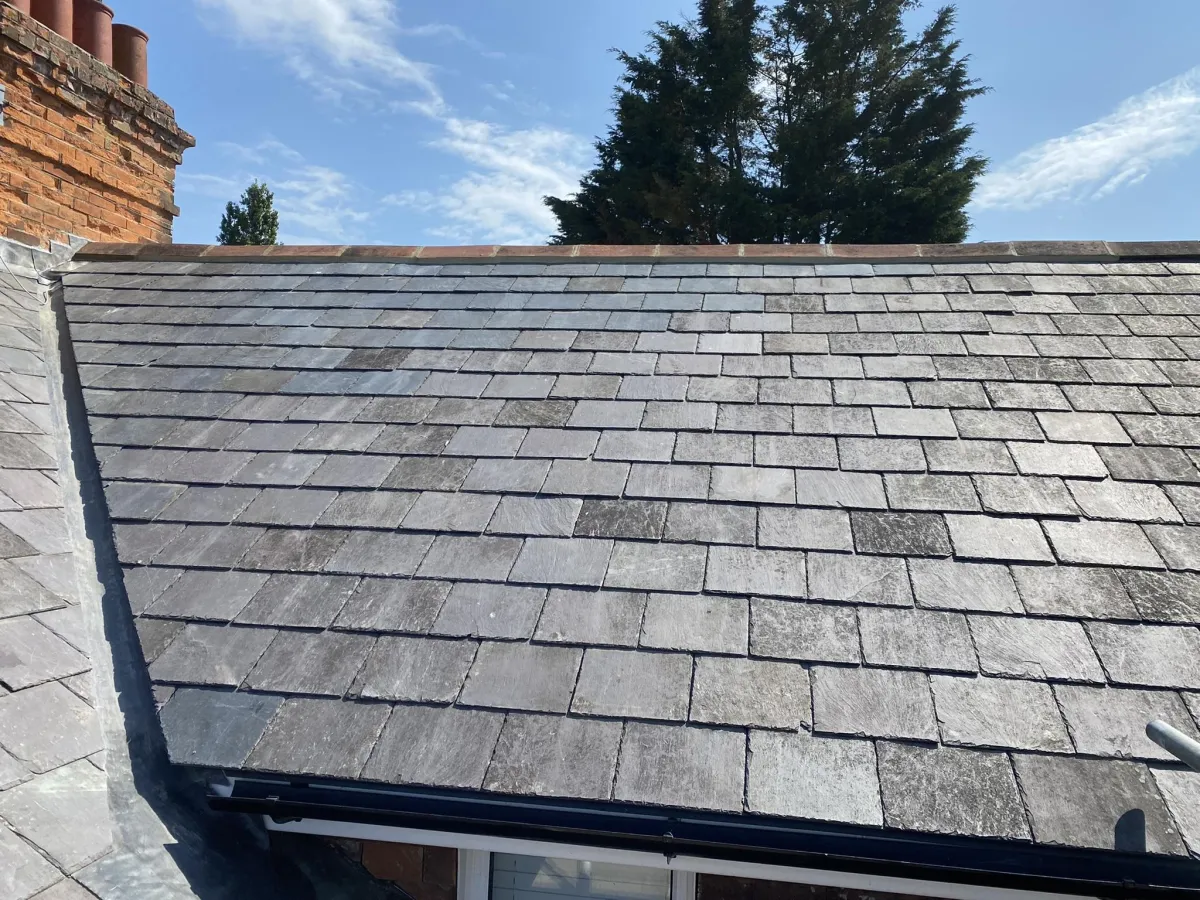
A well-graded slate roof can genuinely last a century or more, but the fixings holding it in place rarely last that long, and that mismatch is behind most of the calls we get about slipped or missing slates.
Understanding what's actually failing — the slate or the nail — decides whether a repair is worthwhile or whether you're patching a roof that needs stripping.
How the roof behaves over 10 to 20 years
In the first decade a properly laid slate roof needs almost nothing beyond the odd slipped slate after a storm. Individual slates can be lifted and refixed with a lead tingle or a slate hook without disturbing the surrounding courses.
Between years 15 and 40, nail sickness becomes the dominant issue — the original fixing nails corrode and lose their grip long before the slate itself wears out, and slates begin to slip in ones and twos across the roof rather than in one obvious patch.
The maintenance regime worth keeping to
Refix slipped slates as soon as they're noticed rather than leaving a gap that lets water track onto the felt and battens beneath.
Check flashings and valleys at every access — leadwork fails independently of the slate and is a common source of leaks blamed on the slate itself.
Keep an eye on the pattern of slips: a handful scattered over years is normal wear; a cluster appearing over a single winter usually points to a systemic nail sickness issue.
Early warning signs
Slates that have slipped just enough to show a sliver of daylight from inside the loft, without falling, are an early nail sickness sign worth acting on before the next storm dislodges them completely.
Rust staining on the underside of slates or on sarking felt is a direct sign the original nails are corroding, even where nothing has slipped yet.
Debris of small slate fragments in the gutter, as opposed to whole slates, points to delamination of the stone itself rather than a fixing problem, which is a different and usually more serious conversation.
Repair versus replace
If slips are isolated and the majority of the roof's fixings are sound, targeted re-fixing with copper or stainless nails and hooks is the right call and buys years.
Once nail sickness is affecting a large proportion of the roof, a full strip and re-slate — reusing the sound original slates and topping up with matched reclaimed stock — is usually more cost-effective than repeated call-outs, because the labour of accessing the roof is the same either way.
Where the felt beneath is also perished, that decides the question for you: you can't re-slate without addressing what's underneath it.
Common questions
What is nail sickness exactly?+
It's the corrosion and failure of the fixing nails holding slates to the battens, usually zinc or iron nails from the original build reaching the end of their working life. The slate itself is often still perfectly sound when this happens.
Can a few slipped slates be fixed without scaffolding the whole roof?+
Small, isolated repairs can sometimes be done with ladders and roof ladders depending on access and pitch, but anything beyond a handful of slates, or work near ridges and valleys, needs proper access equipment for safety.
How do I know if it's worth re-fixing or time to re-slate?+
We assess the proportion of the roof affected and the condition of the felt and battens underneath during the free site visit. If nail sickness is widespread, patch repairs become a recurring cost rather than a solution.
Get your slate roof assessed
Free visit, honest read on whether you're looking at a repair or a re-slate, and a written itemised quote either way.