
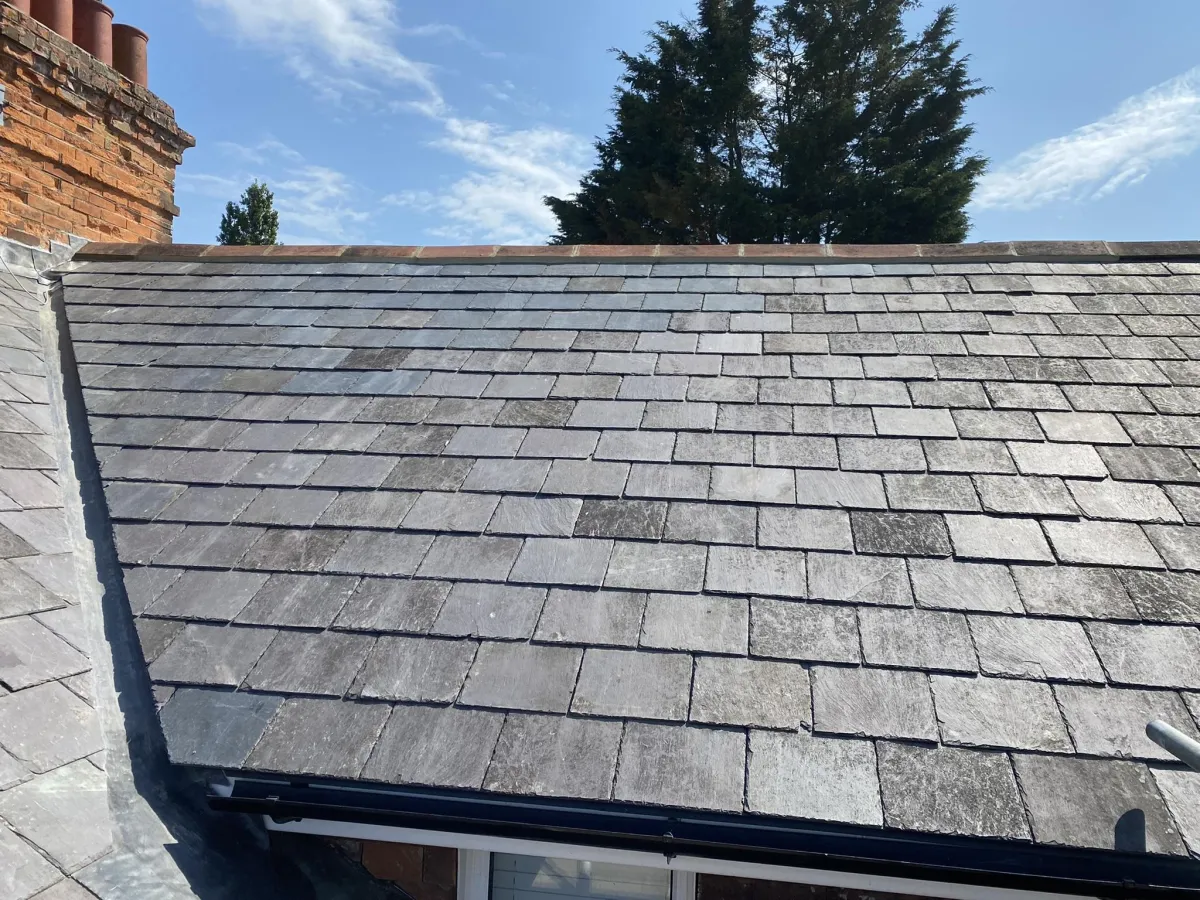
This page covers the practical work. For what peg tiles are and how they differ from other clay tiles, see our clay peg tiles explainer.
Diagnosing the problem
Slipped tiles are the most common complaint. Traditionally tiles hung on oak pegs over riven battens; the pegs rot or the battens decay and tiles slide out of place. Check whether it is a few scattered tiles or a pattern across a whole slope, because a pattern points to failed battens rather than bad luck.
From inside the loft, look for daylight, damp staining on rafters and powdery or broken battens. Moss and lichen alone are not a reason to re-roof.
- Scattered slipped tiles: spot repair
- Whole areas slipping: battens likely failed
- Damp rafters: check valleys, flashings and hips
- Many spalled or delaminating tiles: consider strip and relay
Spot repairs
Individual slipped or broken tiles are replaced using matching reclaimed tiles and secured with suitable fixings. A slate ripper and tingles or hooks allow a tile to be refixed without stripping the tiles around it.
Keep a stock of spare tiles from any past work. Matching the weathered colour of an old roof is easier with tiles from the same roof.
Strip and relay
When battens have failed across a slope, the tiles are carefully stripped, sorted and stacked. Rafters are checked and repaired, a breathable membrane is laid, and new treated battens are fixed at the correct gauge for the tiles.
Tiles are relaid with sound originals, topping up with good reclaimed tiles. Many people put the best originals on the most visible slope and the reclaims on the rear.
Hips, valleys and ridges
Peg tile roofs often have bonnet hips and swept or laced valleys, as well as lead valleys. These details carry a lot of water and deserve the most care. Ridge tiles are bedded and pointed in a suitable mortar, with lime mortar often preferred on older buildings.
Ventilation and insulation
Adding insulation to a peg tile roof without ventilation can lead to condensation on the underside of the membrane and in the timbers. Use a breathable membrane and plan ventilation at eaves and ridge where needed. On listed buildings, the conservation officer may have views on both materials and method.
Gutters, fascias and leadwork
While scaffolding is up for a re-roof, it is sensible to check gutters, fascias, soffits and lead flashings at chimneys and abutments. Replacing tired leadwork or rotten fascia boards at the same time avoids paying for access twice and protects the new roof from water getting in at its edges.
Planning the work around weather
A strip and relay leaves part of the roof open, so the work is planned slope by slope with temporary covers ready. Mortar work at ridges and hips should not be done in frost or heavy rain. Scaffolding with a roof edge protection is usually needed for anything beyond a small repair, and access for storing stripped tiles safely on site needs thinking about before work starts.
If the roof is on a listed building, allow time to agree the method and materials before booking the start date.
Why carpentry skills matter on old roofs
Old roofs often hide sagging rafters, rotten wall plates or altered purlins. A roofer who is also a carpenter can repair the structure in the right way before retiling, rather than packing tiles to hide a dip.
With more than 40 years of experience, we offer a free site visit and a fixed-price written quote for roof repairs and re-roofing.
For the background, read our explainer: clay peg tiles explained.
Common questions
Can my original peg tiles be reused?
Usually a good proportion can. Damaged or delaminated tiles are replaced with matching reclaimed ones.
Why do peg tiles slip?
Traditionally they hung on pegs over timber battens; when pegs or battens decay, the tiles slide.
Do I need consent to re-roof a listed building?
Listed building consent may be needed, particularly if materials or appearance change. Check with the council first.
Do you repair the roof timbers as well?
Yes, roof carpentry is part of the job where rafters, battens or plates need repair.