
The pattern is usually distinctive: everything's fine in normal rain, but during a genuine downpour, water starts running down an internal wall or dripping into the loft below the valley, and it stops again once the rain eases. Because it only shows up under peak conditions, it's easy to put off investigating — right up until a particularly heavy storm causes real damage inside the house.
A valley gutter sits at the junction between two roof slopes and carries a concentrated volume of water compared with the rest of the roof, which is exactly why it's more sensitive to blockages, undersizing or material failure than a straight run of guttering would be.
Why this fault is specifically a heavy-rain problem
A valley collects water from two roof planes at once, so its flow rate during a downpour is much higher than during light or moderate rain. A partial restriction — a build-up of debris, tiles cut slightly too tight, or a valley that's marginal for the roof area feeding it — might cope fine under normal flow and only get overwhelmed once the volume genuinely spikes, which is exactly the pattern most homeowners describe.
The likely causes, most common first
Debris packed at the base of the valley is the single most common cause — leaves, moss and grit collect at the low point where the valley meets the gutter, and under heavy flow that restriction is enough to back water up and over the edge.
An undersized valley for the roof area draining into it is a design issue rather than a maintenance one — sometimes valleys were installed to a standard width without properly accounting for the total roof area feeding into them, and they simply can't carry peak flow in the heaviest storms.
Failed lead or a split liner is a material failure, where the actual waterproof lining of the valley has cracked, split or corroded, letting water escape beneath the tiles rather than carrying it through to the gutter.
Tiles cut too tight to the valley, encroaching on the water channel, restrict the flow even when the valley itself is otherwise sound — a common installation shortcut that only becomes a visible problem under heavy flow.
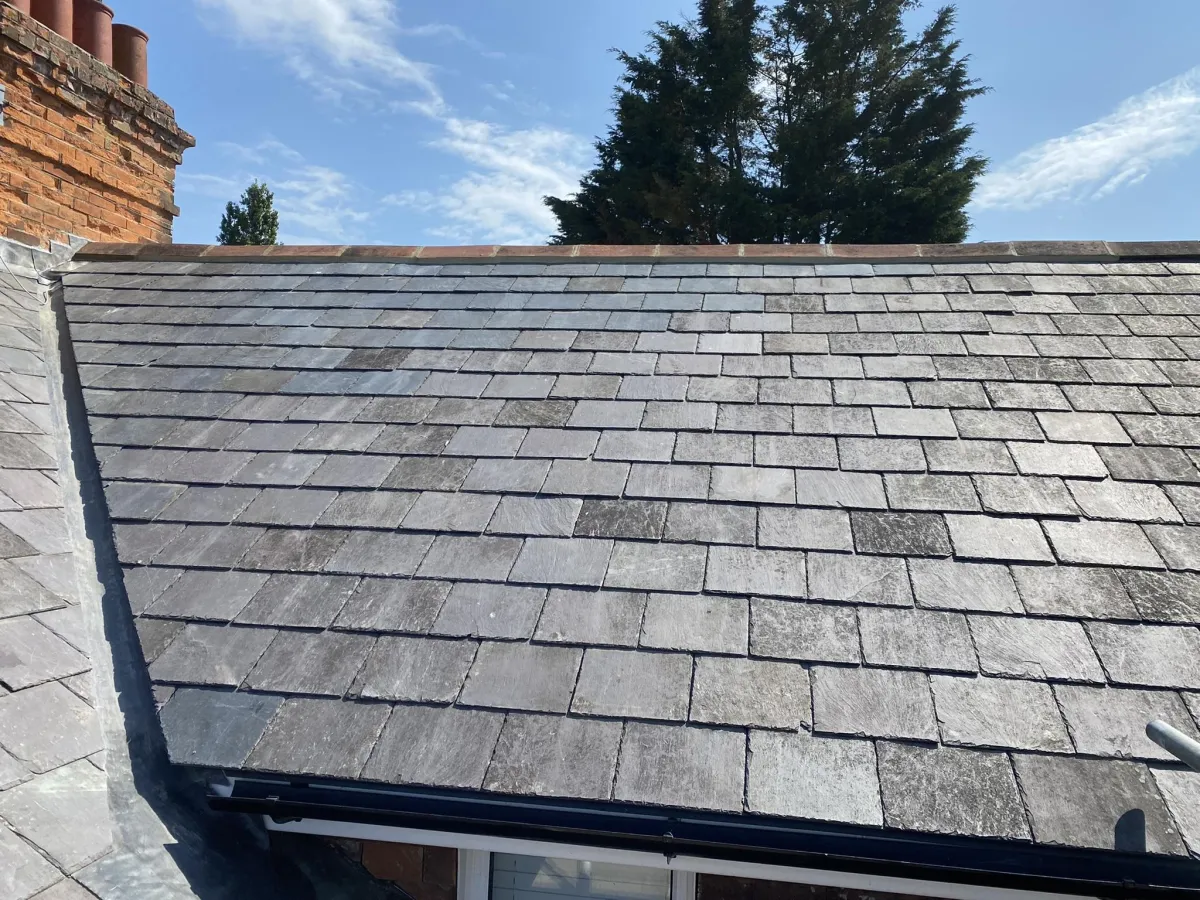
How to check which one applies
- Confirm the pattern first — does it only happen in heavy rain, or has it started happening in lighter rain too, which would suggest the problem has got worse rather than being a fixed capacity issue.
- From a safe access point, or using binoculars from ground level, check the state of the valley for visible debris, cracked lead, or tiles overlapping the channel.
- Check the loft directly beneath the valley for staining, which will usually be concentrated exactly under the point of failure.
- Note whether the overflow started suddenly, which points more towards a specific failure like a split liner, or has always happened in the very worst storms, which points more towards undersizing.
Why this needs a safe, proper look rather than a guess from the ground
Valley gutters are almost always inaccessible without proper roof access equipment, and getting onto a roof without the right equipment is a work-at-height risk that isn't worth taking to have a quick look. What's found in the valley also isn't always obvious from below — a hairline split in lead, for instance, can be invisible from ground level but is exactly the kind of thing that needs identifying before deciding on a repair.
Common questions
Why does my valley only leak in really heavy rain and never in normal rain?+
Because a valley carries the combined flow from two roof slopes, a partial restriction — debris, tight tile cuts, marginal sizing — may cope fine at normal flow rates and only get overwhelmed once rainfall genuinely peaks, which is why the problem seems to appear only in the worst storms.
How urgent is a valley gutter leak?+
It should be treated as high priority. Unlike a leak onto a finished surface, valley leaks typically soak roof timbers directly, and repeated wetting of structural timber is much more serious than the same volume of water reaching a plasterboard ceiling.
Can I clear the debris myself to see if that fixes it?+
Only if you can do so safely from proper access — valleys are rarely reachable safely from a ladder alone. If access isn't straightforward, it's worth having someone with the right equipment check and clear it rather than risking a fall.
Book a free roof inspection
We assess the valley from safe access, identify the actual cause, and give you a written quote before any work goes ahead.