
This is one of the clearest cases where sequence matters more than anything else. New joinery fitted into a cupboard that's still cold, unventilated or affected by a leak will develop the same mustiness and, eventually, the same damage as whatever was stored there before.
Before any design conversation about shelving or drawers happens, the fabric of the space needs putting right.
What has to be checked and opened up first
Any existing lining or shelving needs to come out so the back wall, floor and any pipework can be properly seen and assessed. It's not possible to reliably diagnose the cause with everything still boxed in.
The correct sequence of works
Address the source before the finish. Insulating a wall that's also being fed by a leak just traps the moisture behind a warmer surface.
- Fix any plumbing leak first and confirm the area has dried out before doing anything else
- Insulate the cold external wall surface so it stops being a condensation point
- Design in passive ventilation, either through the door itself or a discreet vent, so humid air has somewhere to go
- Address the floor build-up if it's contributing — typically adding or confirming a damp-proof membrane before any new flooring or joinery base goes down
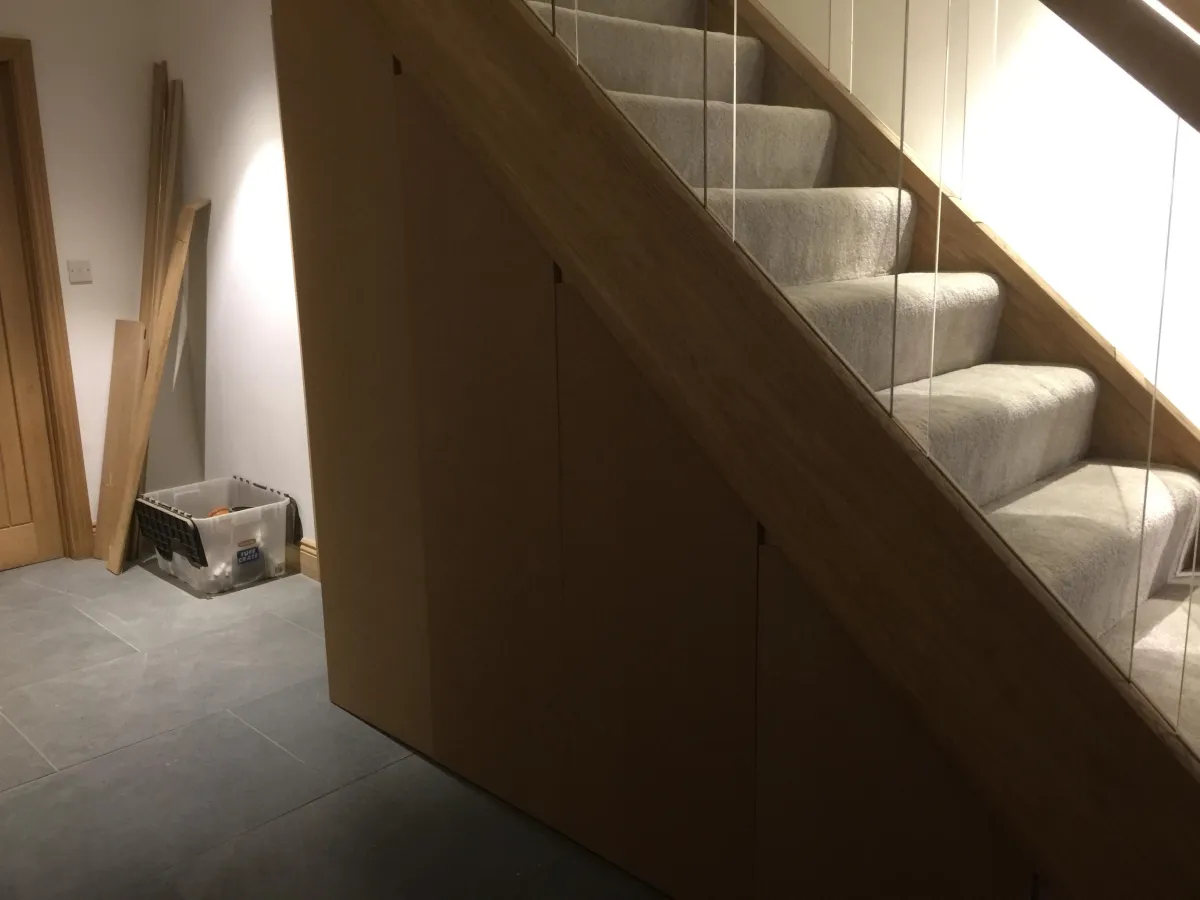
Why fitting new joinery straight away fails
New cabinetry looks smart on day one, but if it's fitted directly against a cold, unventilated wall or over a leak that hasn't been fixed, the same conditions that caused the original mustiness are still present. The joinery itself — timber-based boards especially — is exactly the kind of material that suffers first in that environment.
Interfaces with other trades
Where a leak is involved, a plumber needs to isolate and repair it, and the area should be confirmed dry before the joinery trade returns to insulate and fit the new storage. If insulation upgrades affect a party or external wall build-up more broadly, it's worth checking there isn't a wider damp issue on that wall elsewhere in the house.
How you know the repair has worked
After the fabric work is complete and any new joinery fitted, the cupboard should no longer develop a musty smell through a normal heating season, and the back wall should feel comparable in temperature to other internal surfaces rather than noticeably cold.
Common questions
Can I fit the new storage and insulate the wall at the same time?+
Yes, provided any leak has already been fixed and confirmed dry. Insulating the wall and fitting the joinery in the same visit is normal, so long as the source of moisture has genuinely been dealt with first.
What if there's no leak and it's just condensation?+
Then the main works are insulation and ventilation rather than plumbing repair, and new joinery can follow straight afterwards without needing a drying-out period.
Does the type of board used for the new storage matter?+
Once the space is properly dry, insulated and ventilated, standard joinery boards are fine. It's only a concern if the underlying damp issue hasn't actually been resolved.
Get a written quote for the repair and new storage together
We'll fix the damp cause first, then design and fit built-in storage into a space that will actually stay dry.