
Slate and clay tile are both traditional coverings across Kent and East Sussex, but they are not interchangeable, and on a re-roof the existing covering and the property's planning status usually narrow the choice before appearance or budget come into it.
Weight and roof pitch
Natural slate is lighter than most clay tile coverings for the same roof area, which matters where the existing roof structure was designed for slate and cannot easily be upgraded to carry a heavier clay covering without checking the rafters and purlins.
Clay tiles generally need a steeper minimum pitch to shed water reliably than slate does, which rules them out on some lower-pitched roofs without a change to the roof geometry itself.
Where planning decides it for you
Wealden, High Weald and many other conservation areas across Kent have strong guidance on roof coverings, and on a listed or locally listed building the existing material is often mandated for reinstatement rather than left to preference.
This is worth checking with the local planning authority before ordering materials — a covering that looks similar from the ground is not the same as a like-for-like match in conservation terms.
Repair and long-term maintenance
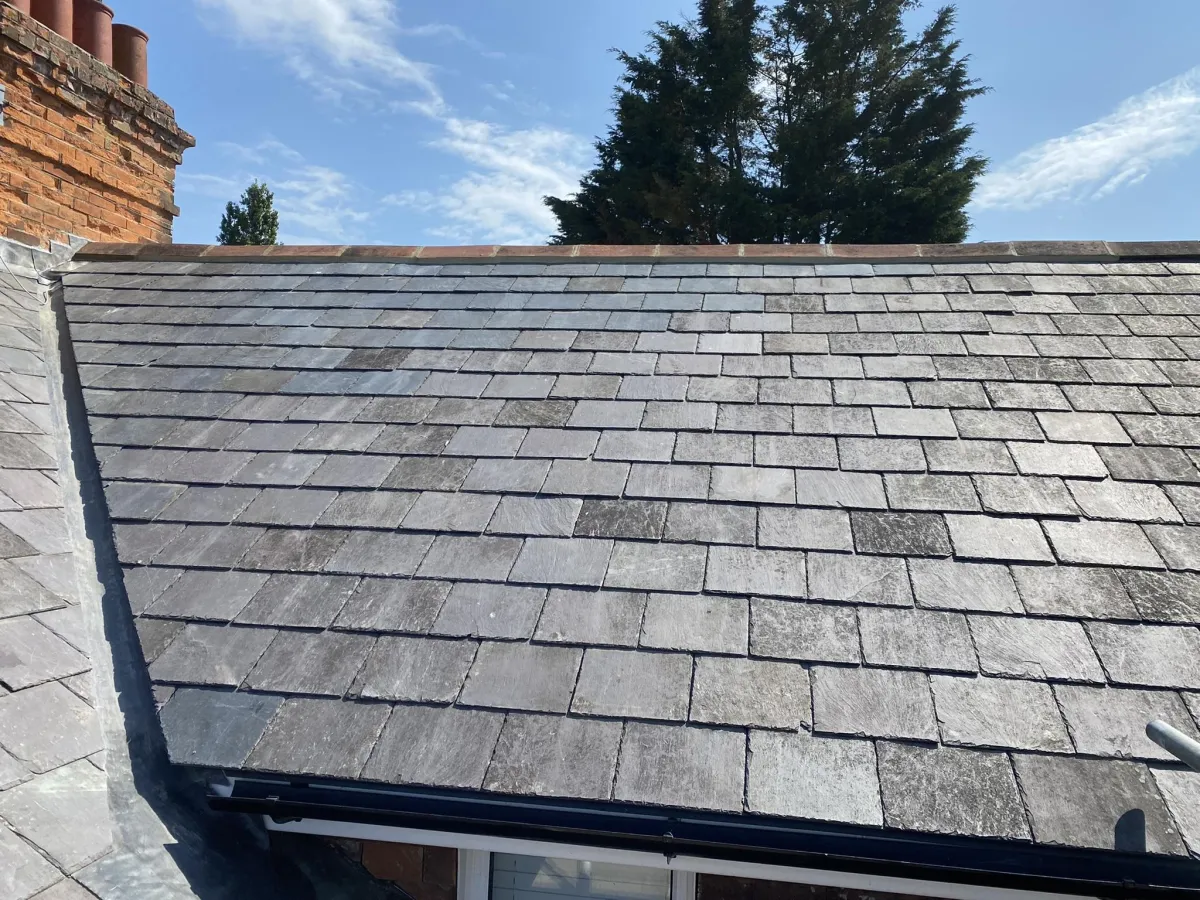
Individual clay tiles are simple to source and replace one at a time when they crack or slip, which suits a roof that gets occasional storm damage over the years. Slate repairs are equally straightforward provided a compatible slate size and thickness is used, though matching an aged slate roof exactly can be harder as quarries and reclaimed stock vary.
Access and scaffold for a full re-roof
Both materials need a full scaffold wrap for a complete re-roof, and the time spent up there is driven more by roof complexity — valleys, dormers, chimneys — than by whether the covering is slate or clay, though slate's lighter weight can slightly ease handling on site.
Where only part of a roof is being re-covered to match an existing slope, matching an aged slate or tile in colour and size on a small scaffold job is often harder than the access itself, since reclaimed stock varies and new stock rarely matches weathered material exactly.
What a re-roofing quote should itemise
It should separate the covering material cost from underlay, battens, ridge and verge detailing, and state clearly whether existing timbers are assumed sound or whether an allowance is included for replacing any found to be decayed once the old covering is stripped.
On a listed or conservation-area property, the quote should also confirm who is responsible for securing any necessary consent for the covering before ordering materials, since this affects both cost and programme.
Common questions
Can I switch from clay to slate on a re-roof?+
Sometimes, but the roof structure needs checking for the weight change, and on a listed or conservation-area property the local authority will often require the original material to be reinstated regardless of preference.
Is slate always more expensive than clay tile?+
Material cost varies with the specific slate or tile chosen — reclaimed and premium natural slate can cost more than standard clay tile, while some clay ranges cost more than budget slate. It should always be priced for the actual roof, not assumed either way.
Does roof pitch limit my choice?+
Yes — most clay tiles have a steeper minimum pitch requirement than slate, so a shallow-pitched roof may only have slate as a genuinely viable covering without altering the roof structure.
Arrange a roofing survey
We'll check your existing structure, pitch and any conservation status before recommending a covering, and give you a written quote either way.