
This comparison is really about maintenance honesty. Both materials perform well in daily use, but they fail in different ways and recover from damage completely differently, which is what should actually decide it.
Daily wear and heat
Quartz is engineered stone bound with resin, and it's extremely hard-wearing against scratches and everyday knocks. It's not entirely heatproof — resin-bound surfaces can scorch or discolour from a hot pan placed directly on them, so a trivet is still worth using.
Solid timber marks more easily — knife scores, water rings and dents from dropped items all show — but every one of those marks can be sanded and re-oiled out, which quartz cannot offer once damaged.
Water and porosity
Quartz is non-porous and doesn't need sealing; spills wipe off without staining, which makes it the lower-maintenance choice around a sink and hob.
Timber is porous where the finish has worn thin, and standing water left around a sink or kettle will eventually darken the wood if it isn't wiped up and the surface isn't oiled on schedule.
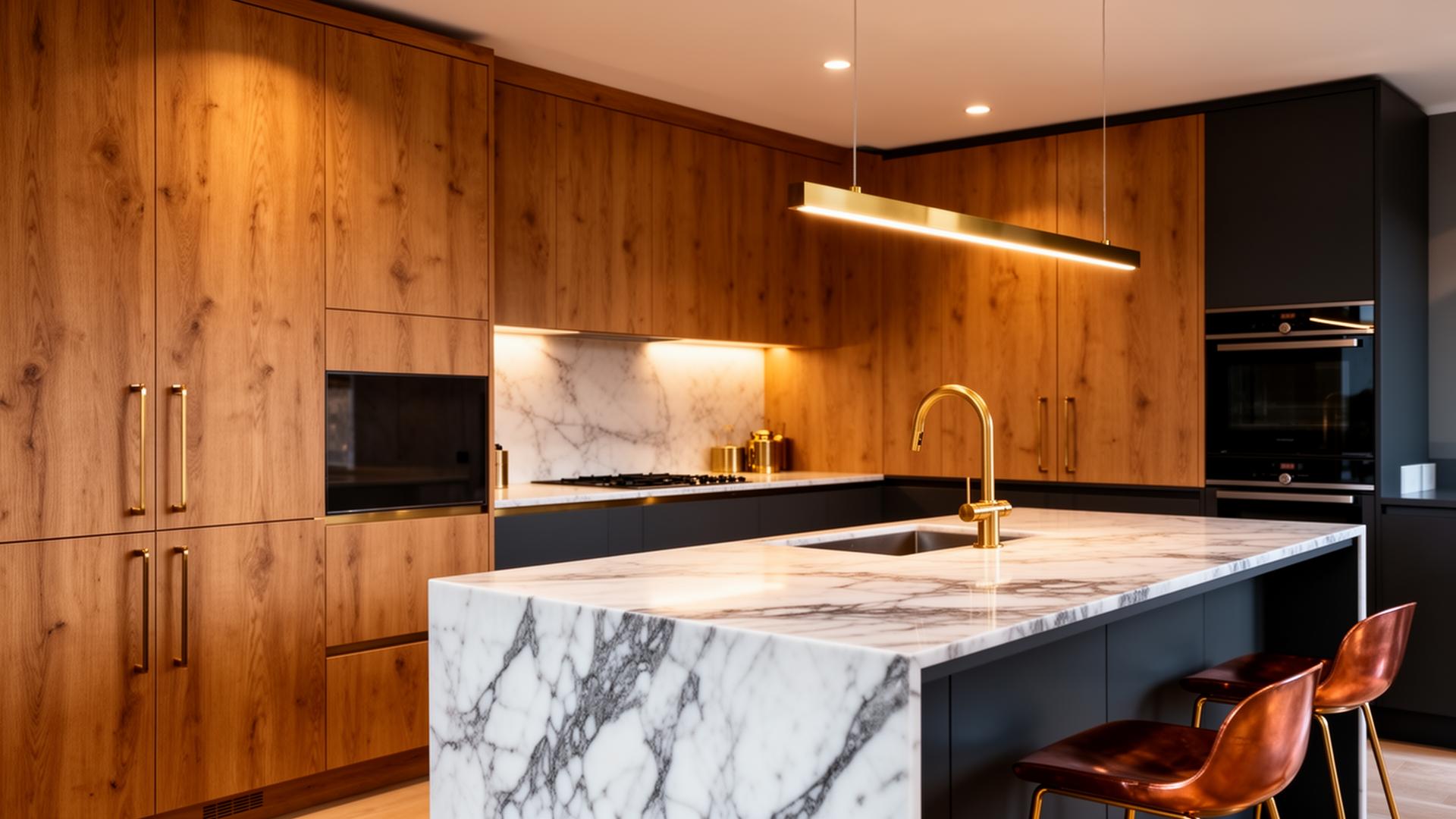
Appearance and how each ages
Quartz stays visually consistent for its whole life — the slab you install is the slab you'll have in ten years, give or take light scratching that shows on darker colours more than pale ones.
Timber changes character over time: it darkens slightly, takes on the patina of the household's daily use, and generally looks better with age rather than worse, provided the oiling schedule is kept up.
Who each one suits
Quartz suits a busy kitchen where nobody wants to think about maintenance and a consistent, uniform appearance is wanted for the life of the kitchen.
Timber suits households who like the idea of a surface they can restore themselves and don't mind the discipline of annual oiling — if that maintenance genuinely won't happen, quartz is the more honest choice.
Common questions
Can a damaged quartz worktop be repaired?+
Chips and cracks in quartz can sometimes be filled and polished by a specialist, but deep damage or heat scorching usually means replacing the affected section, which is far more disruptive than sanding a timber surface.
How often does a timber worktop need oiling?+
As a rule of thumb, high-use areas around the sink and hob need re-oiling more often than the rest of the run — check the manufacturer's guidance for the specific oil used, since products vary.
Is timber worktop hygienic around raw food preparation?+
A well-maintained oiled timber surface is fine for food preparation, but any deep knife scarring or standing damp should be addressed promptly, as bacteria can find a home in open grain that isn't sealed.
Discuss worktop options with us
We fit both quartz and solid timber worktops and will talk you through the honest maintenance trade-off before you choose.