
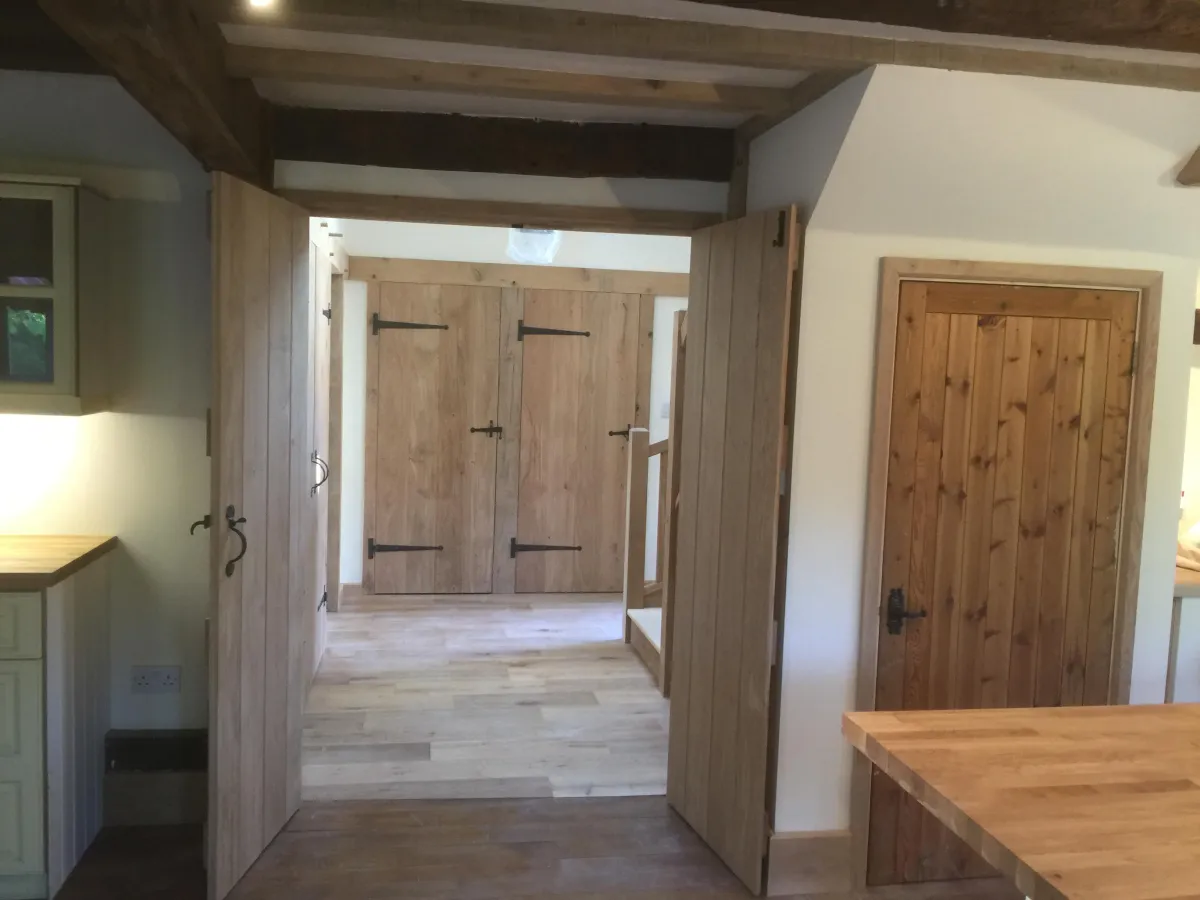
The quickest response to a sticking door is to take a plane to the binding edge until it swings free. It works for about a season. Because planing removes timber rather than correcting the geometry that's actually wrong, the door usually ends up gapped somewhere else, and if the underlying cause — a loose hinge, a dropped frame — hasn't changed, the sticking often returns within a year or two, on a door now permanently thinner than it should be.
A repair that actually holds addresses whatever moved the door out of true in the first place, and only trims timber as a last resort once everything else is sound.
The sequence a proper repair follows
The point of doing it in this order is that each step can undo the need for the next one. A door that's been properly re-hung on sound hinges often needs no easing at all — the sticking was never about the door's size, it was about where the hinges were holding it.
- Establish the actual cause first — hinge fixing, frame movement, floor build-up or structural — before touching the door itself.
- Where hinges have pulled loose, remove them, fill the stripped screw holes with proper timber plugs or hardwood pellets (not just longer screws into the same soft hole), and re-fix into sound material, upsizing screw length or gauge where the frame allows.
- Re-hang the door and check its swing against the frame through the full arc, not just at the closed position, before deciding whether any easing is genuinely needed.
- Only then ease the minimum amount at the actual binding point, working the edge back gradually and re-checking rather than removing timber in one pass.
- Refit the keep to match the door's corrected swing rather than bending the latch or forcing the door to meet a keep that's now out of position.
Why a cosmetic plane-and-paint fails to hold
Planing addresses the symptom at one point in the door's swing without correcting what put it there. If the actual fault is a hinge screw turning in softened timber, the door will keep dropping slightly as the fixing continues to work loose, and the freshly planed edge will start catching again in a different spot.
It's also a one-way fix. Once timber is removed you can't put it back, so if the underlying movement later stabilises or reverses — which happens with seasonal and floor-related causes — you're left with a door that now gaps too widely on the latch side.
Where other causes need to be dealt with first
If new flooring has raised the finished floor level, the door bottom has to be trimmed to the new height, but that trim should happen after the flooring is fully settled and installed, not guessed in advance — carpet and underlay compress over the first few weeks under foot traffic.
If the wall above the opening shows signs of movement — new cracking, a lintel that looks like it's deflected, or several doors on the floor affected together — that has to be assessed by a structural engineer before any joinery repair goes ahead. Re-hanging a door into a frame that's still moving is a repair that will fail again, and in that situation the door is the least of the concerns.
How you know the repair has worked
A properly repaired door closes with even, light resistance through the whole arc, the latch drops into the keep without needing to lift or push the door, and the gap around all three sides reads as consistent by eye. It should also stay that way through a change of season — the test of a fixing job, not a plane job, is that it doesn't need repeating six months later.
Common questions
Can the same door be re-hung more than once?+
Yes, provided there's still sound timber in the frame to fix into. If the frame has been drilled and filled repeatedly over the years, at some point the frame itself needs replacing rather than the hinges being reset again.
Do you need to remove the whole frame to fix a dropped hinge?+
Usually not — the hinge recess and the timber immediately around the screws can be repaired in place with pellets or plugs. A full frame replacement is only needed where the timber itself has failed more widely.
What if the latch keeps missing after re-hanging?+
That means the keep needs moving to match the door's corrected position, rather than the latch being bent or the door re-planed to reach it. Moving the keep is a five-minute job once the door is properly hung.
Get a written quote for the repair
We diagnose the actual cause on site, so the quote covers what will genuinely stop the door sticking, not a temporary ease.