
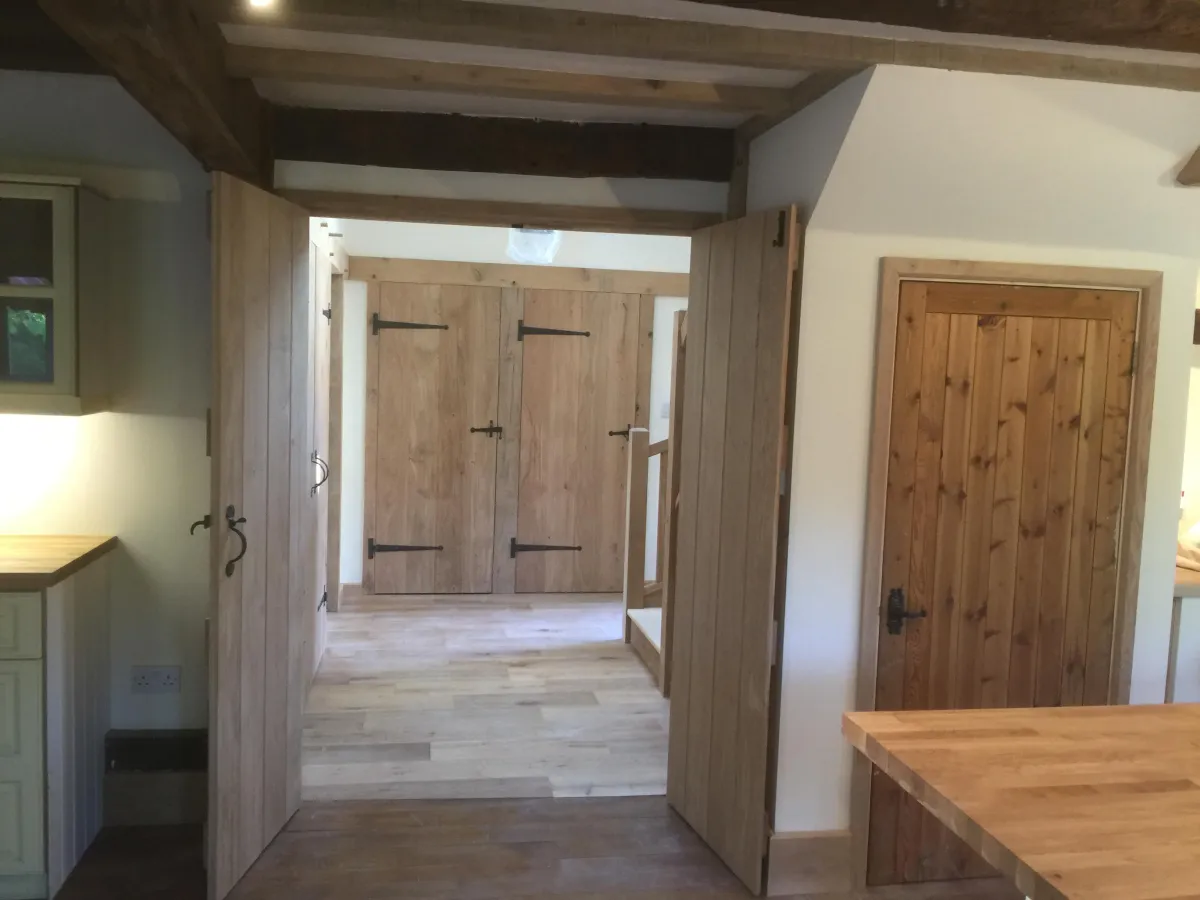
You notice it first as a scrape along the top of the door as it closes, or a latch that no longer drops into the keep without a shove. Sometimes it's seasonal and mild; sometimes three doors on the same floor start doing it within a fortnight of each other, which is a different problem entirely.
The symptom is always the same shape: the door and frame have gone out of true relationship with each other. What's changed is either the door, the frame, the floor beneath it, or the wall around it. Diagnosing which one saves you from planing a perfectly good door to fit a frame that's actually the thing that's moved.
What you'll actually notice
The classic pattern is binding at the leading top corner — the door drags as it swings through the last few degrees of closing, and the paint or varnish there shows a worn arc. A second pattern is a latch that lines up visually but won't click home, meaning the whole frame has racked slightly out of square rather than the door itself changing shape.
Worth noting early: a door that only sticks in humid weather and frees up again in a dry spell is telling you something different from a door that has got steadily worse over months regardless of season.
The likely causes, most common first
Seasonal timber movement is the most common cause by far, particularly on older solid or semi-solid doors in a house without consistent heating. The timber swells slightly with moisture and the door sits tighter in its frame — it usually eases back down in drier weeks.
Hinges pulling out of a softened frame is the next most likely, especially where the frame is softwood and the screws are the short ones fitted at first fix. The door drops a few millimetres at the closing edge, which reads as binding at the top even though the hinge side is the actual fault.
New flooring is an underrated cause. Thicker underlay, an extra layer of engineered board, or new carpet and gripper can raise the floor by more than people expect, and a door cut for the old floor now catches along the bottom.
The least common but most serious cause is structural movement in the wall above the opening — a lintel deflecting, or settlement pulling the frame out of square. This is the one you don't want to miss, because planing the door to fit will mask it rather than solve it.
How to tell them apart
If the gap is even and the frame checks out plumb, you are almost certainly looking at seasonal movement or a floor build-up change, and there's no urgency. If the frame itself is out of true, or several doors nearby have started sticking together, that needs a proper look before anyone touches the door with a plane.
- Check whether the gap between door and frame is even top to bottom, or wider at one end — an even gap points to a level, oversized door; a taper points to a racked frame.
- Test hinge screws with a screwdriver while someone holds the door shut — if they turn freely in the timber, the fixing has failed, not just loosened.
- Check the frame against a spirit level or plumb line on both the head and the jambs — a frame that's out of square in more than one plane is not a seasonal problem.
- Look at whether other doors on the same floor, or cracks in nearby plaster, have appeared or worsened at the same time — that pattern points away from a single door problem and towards the building moving.
When it's worth getting someone to look
A single door sticking on its own, especially one that's done it before in damp weather, is not something to worry about. It becomes worth investigating when it happens suddenly, when it's accompanied by new cracking in the wall or ceiling above the opening, or when several doors on one floor start misbehaving in the same period.
If you suspect the wall or lintel above the opening is the actual cause, that's a job for a structural engineer to assess before any joinery work goes ahead — treating the symptom on the door won't fix movement in the structure, and in some cases repeated re-hanging just wastes money while the real cause continues.
Common questions
Will a sticking door sort itself out?+
If it's genuinely seasonal, yes — it often eases as the timber dries out over a few weeks. If it's been getting worse steadily for months rather than coming and going with the weather, don't wait on it.
Can I just plane the door to fit?+
You can, but if the actual cause is a dropped hinge, a raised floor or a racked frame, planing removes material you'll wish you had back once that underlying cause is fixed and the door then fits too loosely.
Is it normal for more than one door to stick at once?+
Occasionally, if the whole floor's humidity has changed — after new flooring or a change in heating pattern, for instance. If it's not explained by something like that, it's worth having someone check the structure rather than assuming coincidence.
Book a free diagnostic visit
We'll check the door, the frame and, where it matters, what's above it, and give you a written quote for whatever it turns out to need.