
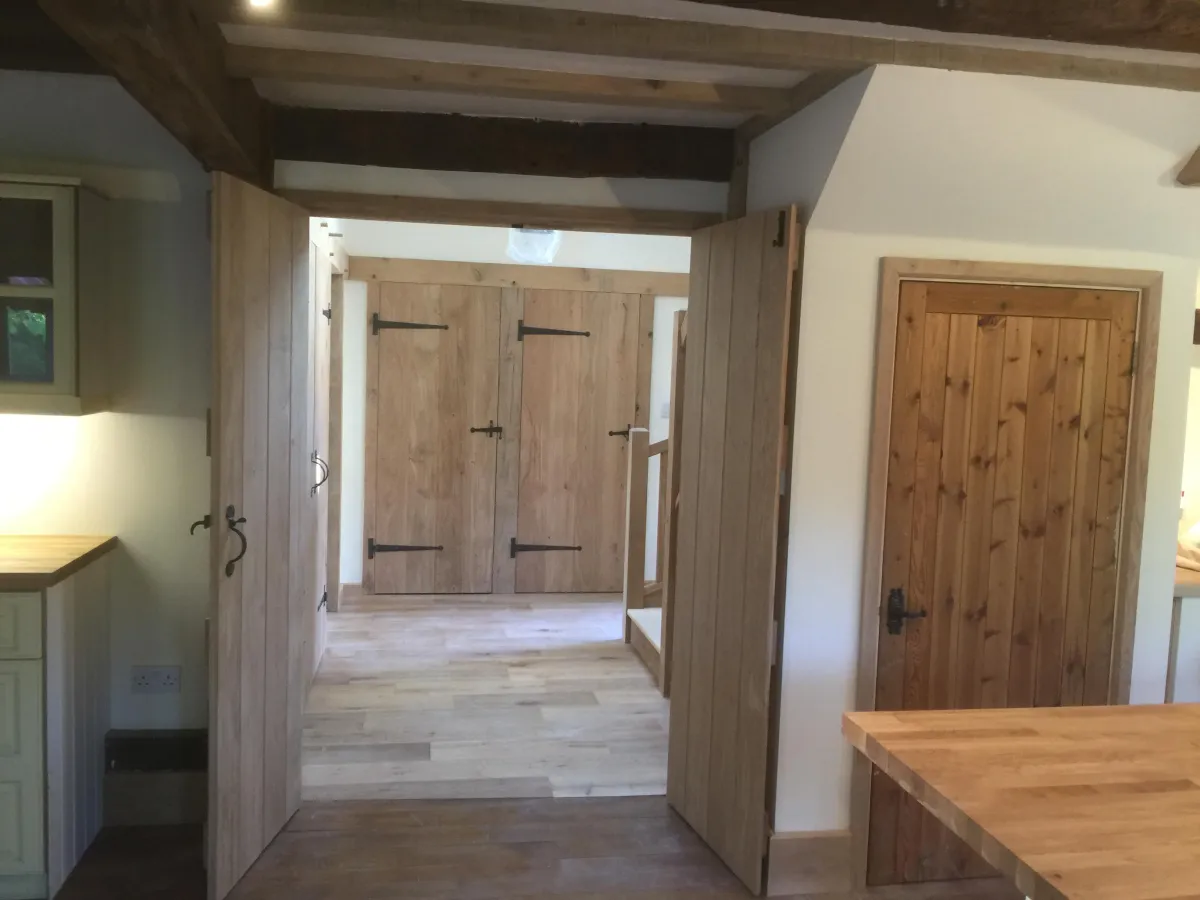
Because the core of an engineered oak veneer board doesn't move the way solid timber does, the boards themselves stay flat and square for decades in a normal domestic environment. The ageing story is really about the veneer face, not the board's structure.
Over 10 to 20 years, a well-made veneer board that's kept out of direct water and hard knocks will look much the same as the day it was fitted, needing nothing more than the usual care any timber surface gets.
Normal ageing
Oak veneer will pick up a slightly deeper, warmer tone with UV exposure over the years, the same way solid oak does, though somewhat more evenly since the veneer is a thin, consistent layer.
Handles and pull points on doors will burnish slightly with contact over time. This is cosmetic and doesn't indicate any problem with the board.
Maintenance regime
Wipe with a barely damp cloth and dry it off — never leave standing water on a veneered surface, particularly at joints and edges where water can find the seam between veneer and lipping.
If the boards are oiled rather than lacquered, an occasional light reapplication keeps the finish even, in the same way you'd maintain solid oak. Lacquered finishes need nothing beyond cleaning until the lacquer itself starts to wear.
Avoid abrasive cleaning products on veneer — anything that scours will cut through the thin face layer faster than it would mark a solid board.
Early warning signs
A lifted corner or edge, often near a handle cut-out or where a door has been knocked, is the first sign the veneer bond has failed locally. Left alone, moisture gets under the lifted edge and the delamination spreads.
Colour or texture inconsistency appearing at a seam usually means water has already tracked under the veneer, even if the surface still looks flat.
Repair versus replace
A small lifted edge can sometimes be re-glued and clamped if caught early, and the repair is genuinely invisible once refinished. Once delamination has spread across a face, or the core beneath has swollen from trapped water, re-gluing won't hold and the panel needs replacing.
Because veneer can't be sanded through to bare timber and refinished the way solid oak can, any damage that goes through the face — a deep scratch, a burn, an impact — usually means panel replacement rather than repair.
Common questions
How long should engineered oak veneer joinery last?+
In normal domestic use, well fitted and cared for, 15-20 years or more without structural issues is realistic. The finish will need occasional attention before then.
What causes veneer to lift?+
Almost always sustained moisture at an edge or joint, or an impact that breaks the bond between veneer and core. Dry, well-ventilated rooms with no standing water rarely see it.
Can I get a matching replacement panel years later?+
It's harder than replacing a solid oak piece, since veneer batches and cut patterns vary between suppliers over time. We keep spec details on file where we've fitted the original run to help match as closely as possible.
Get advice on maintaining or repairing veneer joinery
We can assess existing veneer panels on a free site visit and tell you whether a repair will hold or a panel needs replacing.