
Worktops sit at the point where structure, finish and daily use overlap, and concrete versus stone is one of the more genuinely material-led decisions a kitchen project throws up rather than simply a budget one.
Both are heavy, durable surfaces suited to a well-supported base cabinet run, but they get there through completely different processes.
Shape and integration
Concrete is cast in a mould, which means integrated sinks, drainer grooves, upstands and even seating can be formed as one continuous piece with no joints where a separate sink would otherwise sit.
Stone is cut from a slab, which limits it to shapes the slab and the fabricator's tooling allow — still highly capable for standard runs and islands, but genuinely bespoke integrated forms are harder to achieve.
Appearance and consistency
Every concrete worktop is unique — colour, aggregate and any surface texture are controlled at the pour, which gives a distinctive, individual result but also means no two are ever quite identical, including across a repeat order.
Natural stone slabs vary too, but within a far more predictable and established supply process — you can view the actual slab or a close match before it's cut, which suits people who want to know exactly what they're getting.
Living with it day to day
Concrete needs sealing and will show some patina over time — fine hairline crazing and colour changes are part of its character rather than a defect, but it's not to everyone's taste on a surface expected to look pristine for years.
Sealed natural stone resists staining and scratching very well and holds its finish predictably, with a wider range of polished, honed and leathered options to choose from off the shelf.
Lead time and site sequencing
Stone is templated once cabinets are fitted and cut off site by a fabricator, so the kitchen can generally be finished within a couple of weeks of templating, with the old worktop usable right up until the new one is installed.
A concrete worktop is either cast in a workshop from a template, which follows a similar sequence to stone, or cast in place on site, which needs the base units protected and the room out of use for longer while the pour cures.
What a written quote should itemise
Whichever material is chosen, the quote should separately itemise templating, material and fabrication, cut-outs for sinks and hobs, edge profile, and delivery and installation, since these are priced quite differently between a stone fabricator and a concrete caster.
It should also state who is responsible for protecting the worktop during the rest of the build and what the sealing and aftercare schedule is, since both materials rely on maintenance that's easy to skip once the kitchen looks finished.
Common questions
Which is more prone to cracking?+
Both can crack if under-supported, but concrete is more sensitive to base cabinet movement during curing and installation, which is why the substructure needs to be dead level and fully settled before templating.
Can either material go over an island with a waterfall edge?+
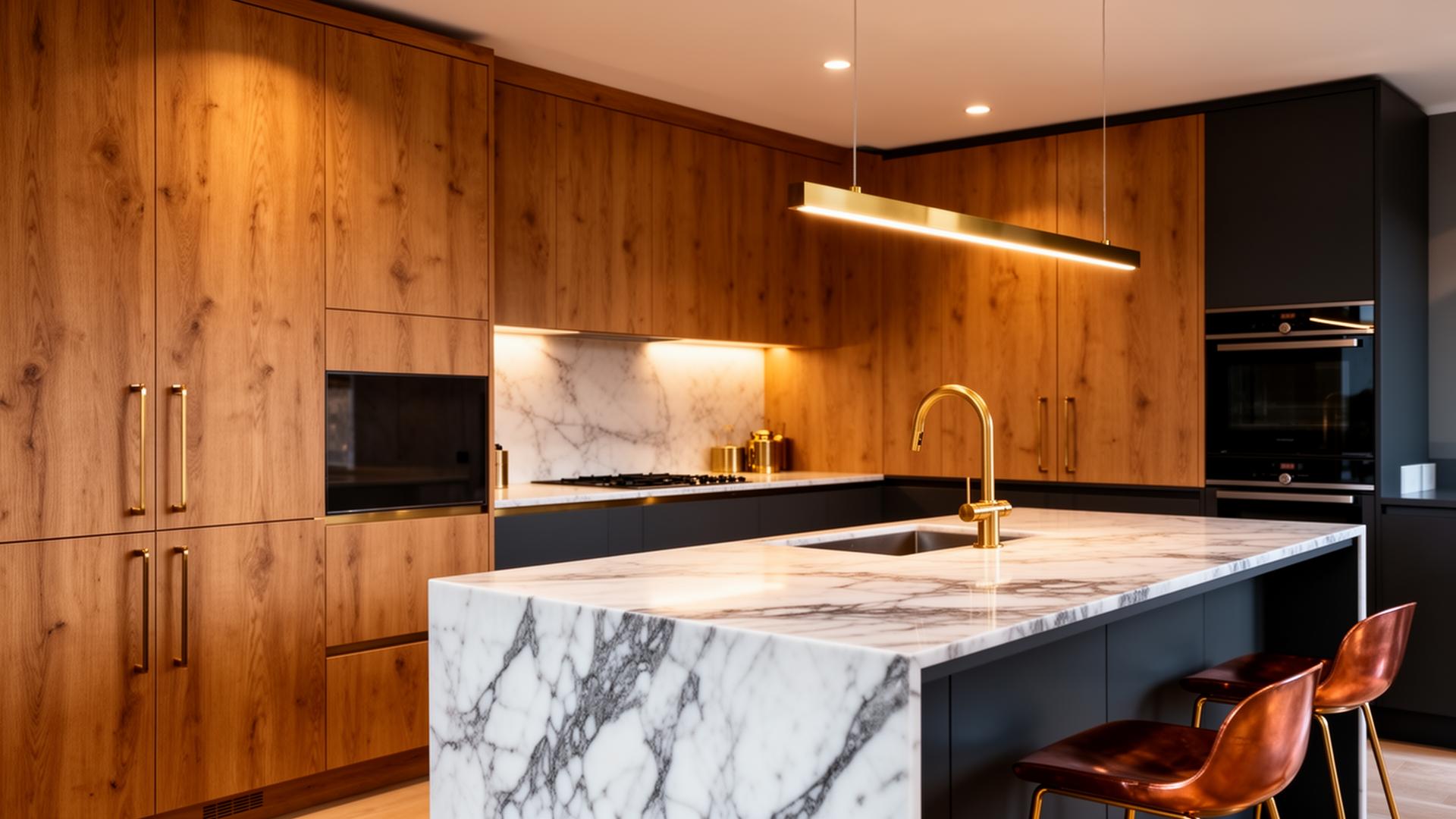
Yes, both can, though stone waterfall edges rely on precise mitred joints while concrete can be cast as one continuous form if the mould is built accordingly.
Is one easier to repair if damaged?+
Concrete can often be patched and reground locally by a skilled installer; damaged stone usually needs a specialist stone restorer, and a chip near an edge is sometimes easier to disguise in stone's natural pattern.
Talk to us about your worktop options
We work with both cast concrete and natural stone fabricators — free site visit, and a written quote once your layout and sink positions are set.