
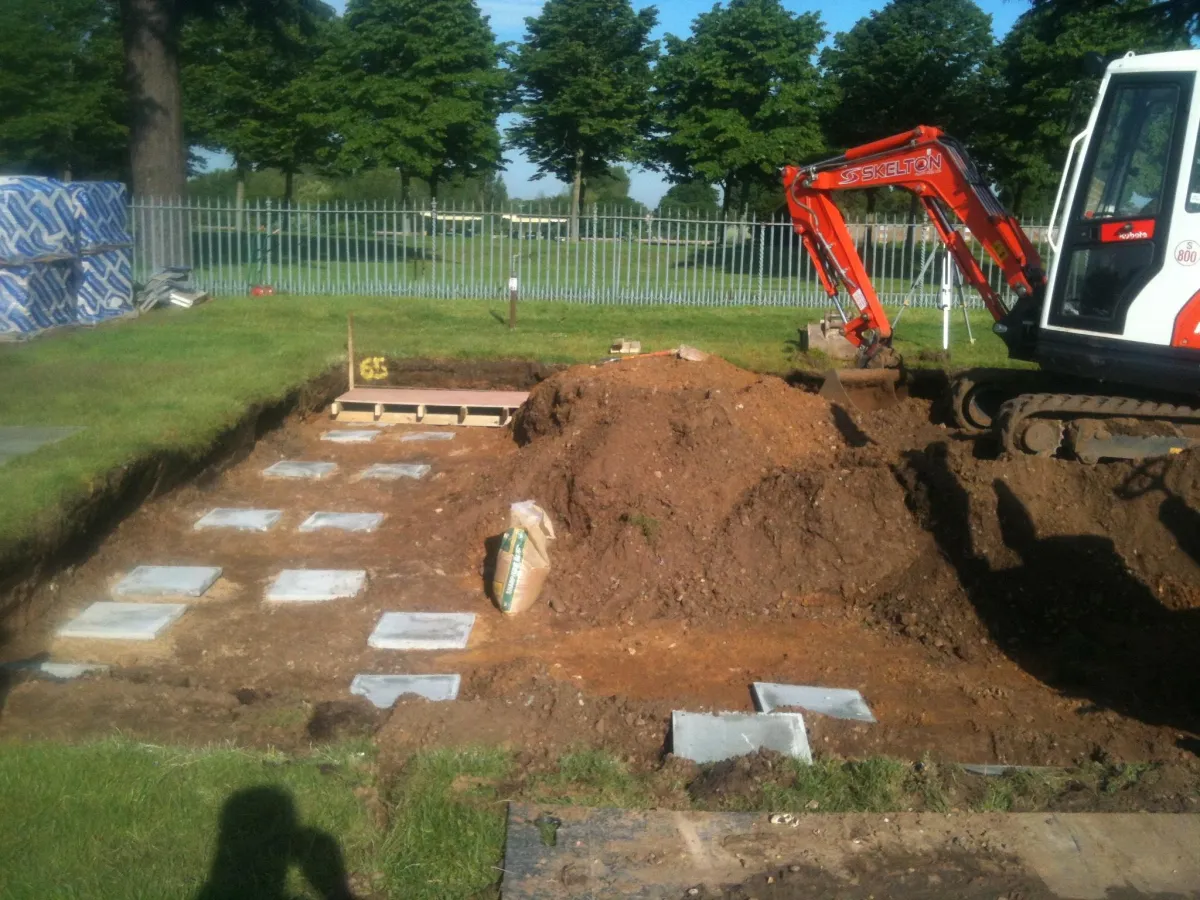
Works that affect a shared wall, a boundary structure, or excavate near a neighbouring building's foundations fall under a separate statutory process, distinct from and running alongside planning permission and building regulations. Getting planning permission granted doesn't touch this obligation at all — it's a completely different legal requirement, aimed specifically at protecting adjoining owners' interests.
It applies more often than people expect, including on many semi-detached and terraced properties where a rear extension's foundations come within three metres of a neighbour's.
Identifying which sections of the Act apply
The relevant legislation covers three broad situations: work directly to a shared wall between two properties, building a new wall on or at the boundary line, and excavation near a neighbouring building's foundations within specified distances. Which of these applies — sometimes more than one — determines exactly what notice needs serving and to whom.
This should be established early, ideally at design stage, since the answer affects both the programme and, in some cases, the foundation design itself if the works need to avoid undermining a neighbour's structure.
Serving correct notices with the right notice period
Once it's clear the Act applies, formal written notice has to be served on every affected adjoining owner, and each type of notice carries its own minimum notice period before work can start — commonly one or two months depending on which section applies. This period runs from the date notice is properly served, not from when work is hoped to begin, so it needs building into the programme well in advance.
Notices need to be accurate about what's proposed and correctly addressed to the actual legal owner of the adjoining property, which isn't always the person currently living there — a rented property, for instance, needs notice served on the landlord as owner.
Agreeing an award or obtaining written consent
An adjoining owner can respond to a notice by consenting in writing, in which case work can proceed once the notice period has run its course, or by dissenting, which triggers the appointment of a surveyor (or surveyors) to produce a party wall award — a document setting out what work can be done, how, and with what protections for both properties.
Where a surveyor's award is needed, this adds time and, generally, a fee usually borne by the person carrying out the works, but it's a formal document that protects both sides if a dispute arises later.
Recording a schedule of condition
Before works begin, a schedule of condition — a detailed photographic and written record of the adjoining property's condition, particularly the shared wall and nearby structure — should be prepared. This protects both parties: it's the baseline against which any claimed damage during the works is assessed.
Skipping this step doesn't prevent the works, but it removes the evidence needed to fairly resolve a dispute if cracking or damage is later alleged, which can turn into a drawn-out and expensive disagreement without one.
Kent and East Sussex terraces and semis
Given the number of Victorian and Edwardian terraces and inter-war semis across towns like Ashford, Maidstone, Tunbridge Wells and Tonbridge, party wall matters come up on a large proportion of extension and loft conversion projects in this area, often on both sides of a semi-detached pair. Serving notice promptly, rather than treating it as an afterthought once building control paperwork is sorted, keeps a project on schedule.
On terraces with more than one adjoining owner, notice has to be served on each of them individually, which can extend the process where multiple neighbours are involved.
Common questions
Do I need a party wall notice for an extension not touching the shared wall?+
Possibly, yes — the Act also covers excavation within three or six metres of a neighbouring building's foundations, depending on depth, even where no new wall touches the shared boundary directly.
How long before I can start work after serving notice?+
This depends which section of the Act applies, but notice periods of one or two months are typical, and work can't lawfully start until that period has elapsed or written consent is received earlier.
What if my neighbour ignores the notice?+
If there's no response within the statutory period, it's treated as a dispute, which then triggers the surveyor appointment process to produce an award — it doesn't allow work to simply proceed by default.
Get your party wall notices served correctly
We can advise on which sections of the Act apply to your project and connect you with a surveyor to serve notice and prepare a schedule of condition.