
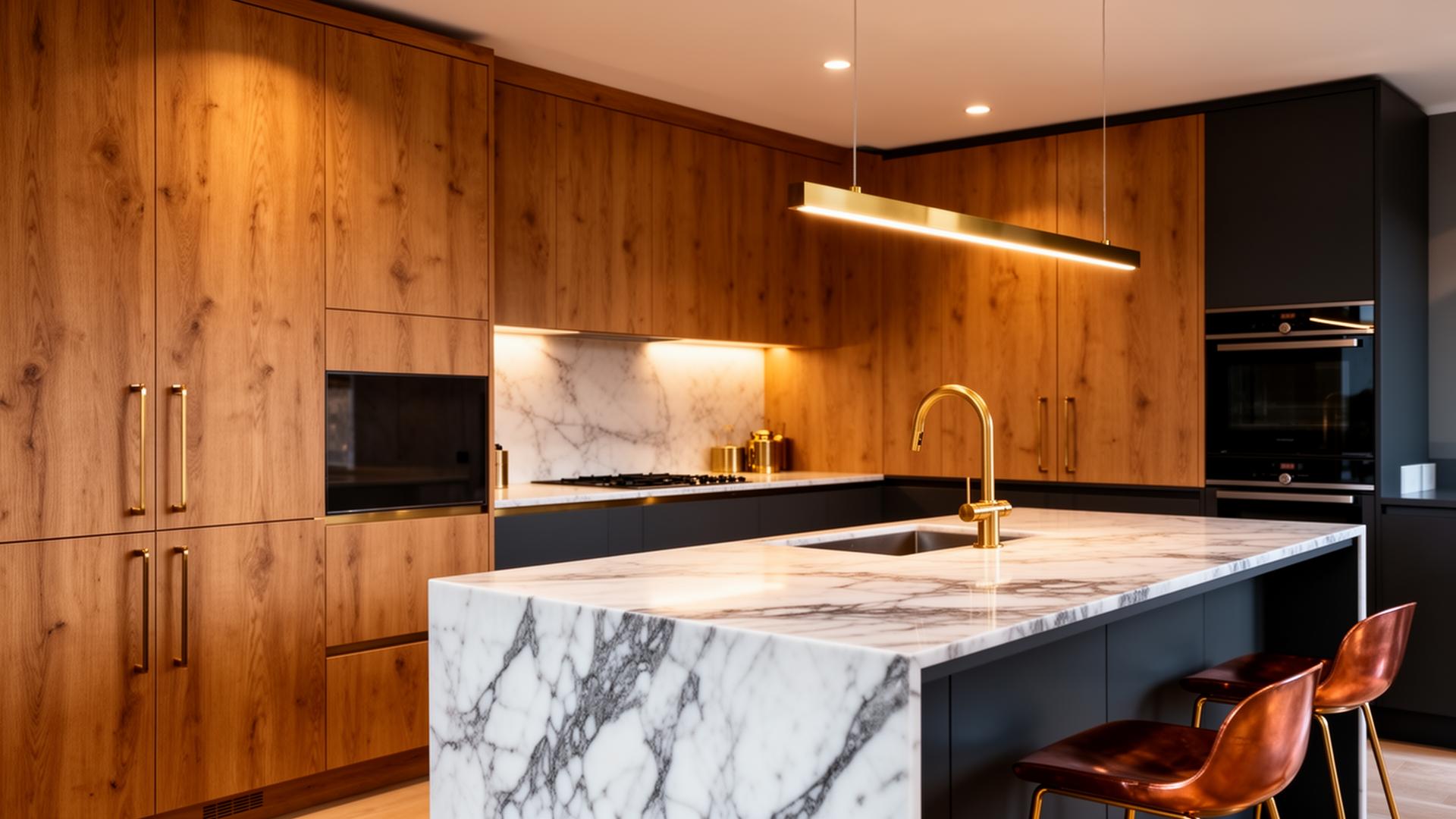
Where carcasses have swollen from a leak, the plinth has rotted or the layout fights the way you cook, a refit is usually better value in the long run. A careful look at the units, the floor beneath them and the services behind them is what separates the two.
Repairs that are almost always worth doing
Dropped or misaligned doors are usually worn hinges or loosened fixings, and are quick to put right. Drawer runners wear out and can be replaced. Loose end panels and plinths can be refixed or replaced to match. These small repairs are often what makes an older kitchen feel new again.
- Rehanging and adjusting doors and replacing worn hinges
- Replacing failed drawer runners and soft close fittings
- Refixing wall units that have pulled away from the wall
- Resealing worktops and upstands where water gets in
Alterations that change how the kitchen works
Removing a unit to fit a larger fridge or a dishwasher, adding an end panel and shelf, building a larder cupboard into an alcove, or extending a run with matching units are common alterations. Moving a sink or hob further than a short distance means moving water, waste, gas or power, which is where a small alteration becomes a bigger job.
Bespoke joinery works well here, because a made to measure cupboard can fill an awkward gap that standard units never quite reach.
Worktops and doors: the cosmetic reset
New worktops and new doors on sound carcasses give most of the look of a new kitchen. Worktops are templated after the base units are checked for level, and the sink and hob cut outs are made to suit. New doors need matching hinge positions and sizes, which is simple on standard carcasses and harder on older or unusual units.
Signs a refit is the better answer
Chipboard carcasses that have swollen near the sink or dishwasher do not recover. Soft or springy floor under the units points to a leak that has reached the joists. Wiring or pipework that needs moving anyway, or a layout that forces you to cross the room for every task, usually tips the balance towards a new kitchen.
Our kitchen renovation cost guide explains what drives the price of a full refit, which helps compare the two options honestly.
Water damage: find the cause first
Before any repair, the source of the water has to be fixed: a weeping waste trap, a dishwasher hose, failed worktop sealant or a leak behind the wall. Replacing a swollen panel without dealing with the cause simply ruins the new one.
How we approach kitchen repairs and alterations
Our carpenters have more than 40 years of experience with kitchen joinery, from small repairs to full bespoke kitchens made in our Biddenden workshop. We start with a free site visit to check the carcasses, floor and services, then give a fixed-price written quote for the repair, the alteration or, if it is genuinely the better value, a new kitchen.
Common questions
Can you replace kitchen doors without replacing the units?
Yes, if the carcasses are sound and square. The new doors are made or ordered to match the existing hinge positions and sizes.
Is it worth repairing an old kitchen?
It usually is when the carcasses are dry and solid. Swollen boxes, a damaged floor beneath or a poor layout are signs a refit is better value.
Can you fit a larger fridge or a dishwasher into an existing kitchen?
Often, by removing or altering a unit and adding matching panels, provided water, waste and power can reach the new position.
Do you do small kitchen repairs?
Yes. Our carpenters carry out repairs and alterations as well as full kitchens.
Do you give a fixed price?
Yes. After a free site visit we provide a fixed-price written quote.