
This is a shorter comparison than most, because it genuinely hinges on one question: will the grout lines actually get cleaned and resealed on schedule, or will they be left until they look tired?
Grout is the whole story with tiles
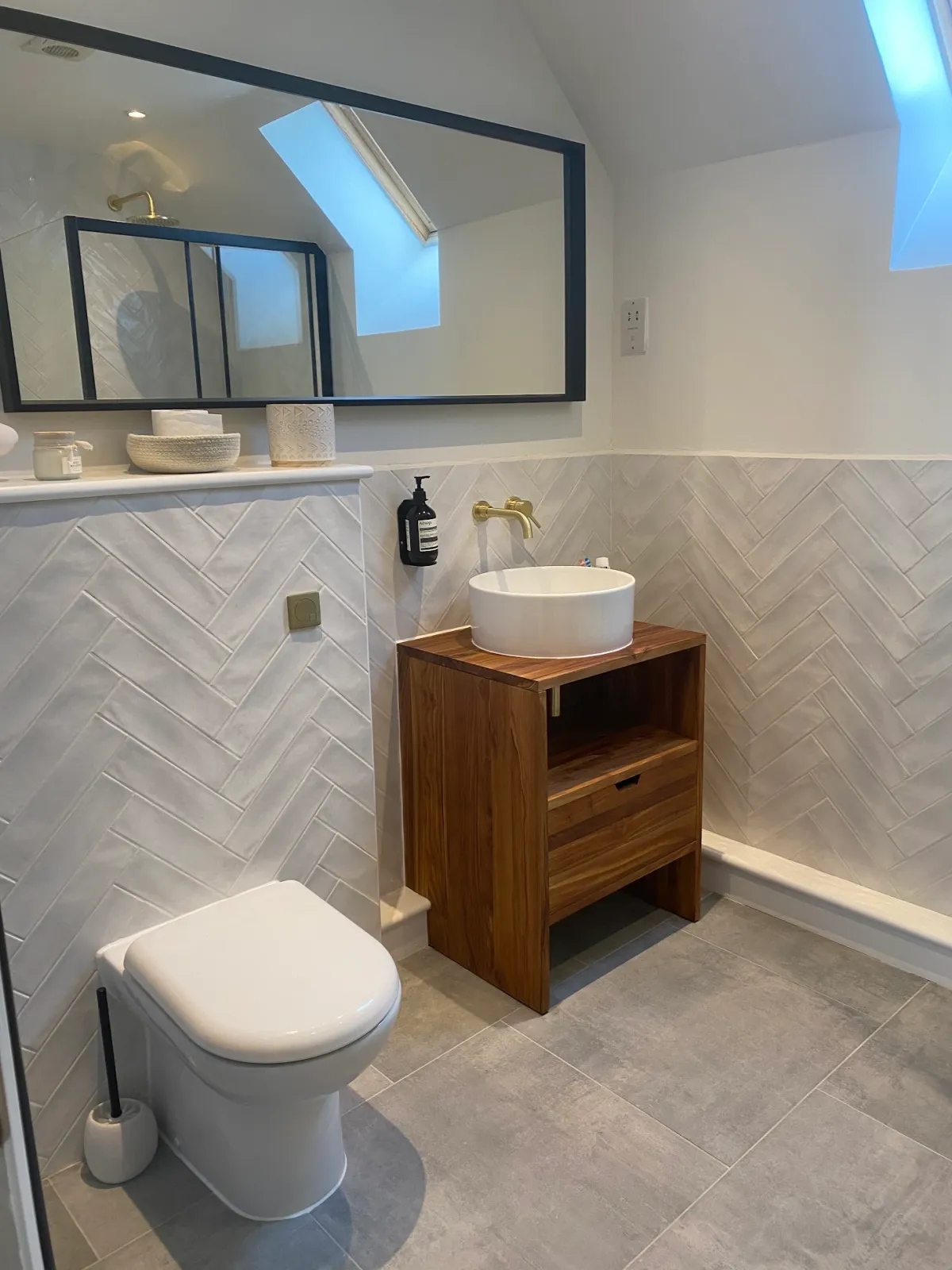
Tiled walls give an enormous choice of finish, pattern, size and colour, and individual cracked or chipped tiles can be replaced without redoing the whole wall — a genuine advantage over panels, which usually need replacing as a full sheet.
The trade-off is the grout: it needs regular cleaning to resist mould in a wet, humid environment, and it needs resealing periodically or it becomes a route for water to reach the wall behind the tiles.
What panels remove from the equation
Large-format shower wall panels have no grout lines at all, which removes the single biggest ongoing maintenance task in a bathroom and the most common visible sign of neglect.
They also install faster than a full tiling job, since fewer joints mean less time spent setting out, cutting and grouting, which can matter if the bathroom is the only one in the house and downtime needs to be short.
Where each has fewer failure points
Every grout line is a potential point where water can find its way behind the tile if maintenance lapses, so a tiled wall has many small failure points spread across its surface.
A panelled wall has far fewer joints overall — typically just at panel edges and corners, sealed with silicone — so there are fewer places for water ingress to start, provided those edge seals are done properly and checked periodically.
Cost drivers behind the headline price
Tiling cost is driven mainly by labour — setting out, cutting around fittings, and grouting take time regardless of tile price, so a cheap tile with a complex layout can still cost more to fit than an expensive tile laid in a simple grid.
Panel cost is driven more by the material and sheet size than by labour, since installation is quicker, but panels for an awkward-shaped shower recess with multiple corners can need more cutting and more panels than a straightforward rectangular enclosure, narrowing the saving.
How to decide in one conversation
Ask honestly how the grout in the current bathroom has been maintained. If it's discoloured, cracked, or simply never gets attention, that answer alone points to panels regardless of any preference for a particular tile.
If tile choice, pattern or a specific traditional finish matters more to the room's look than the maintenance saves in time, tiles remain the right call — the decision genuinely comes down to that one trade-off rather than a technical limitation of either material.
Common questions
Do shower wall panels look as good as tiles?+
Panel ranges have expanded considerably and include stone-effect and marble-effect finishes, but the choice of pattern, size and colour combination is still narrower than what tiling offers, since every tile size and layout is possible.
Can a damaged panel be repaired instead of replaced?+
Minor scratches on some panel materials can be polished out, but a genuinely damaged panel usually needs replacing as a full sheet, whereas an individual damaged tile can be replaced on its own.
How often does shower grout need resealing?+
It depends on usage and ventilation, but as a general habit, check grout condition at least annually and reseal or regrout as soon as it looks porous, cracked or discoloured, rather than waiting for a leak to show it's overdue.
Get your shower walls specified
Tell us how much grout maintenance your household will actually do, and we'll recommend tiles or panels honestly on that basis.