
Building work on a farm or rural holding rarely means working on a single, self-contained house. It usually means a farmhouse of one age, outbuildings of several others, and a working yard where deliveries and access have to fit around a functioning agricultural business.
Understanding what changes because of that context — rather than treating the job like a standard domestic project moved to a bigger site — is what keeps the work efficient.
Mixed-age buildings need mixed-age thinking
A single holding might have a timber-framed farmhouse, a Victorian brick barn, and a 1970s steel-portal shed, each needing an entirely different approach to structure, roofing and repair. Treating them all under one specification, rather than assessing each building on its own construction and condition, tends to produce over-specification on the simple sheds and under-specification on the historic core.
A survey that separates the holding into its constituent buildings, with a distinct scope for each, is the more efficient starting point than a single blended quote.
Access and delivery logistics
Long approach tracks, field gateways and yards shared with livestock or machinery movements change how materials arrive and how scaffolding or plant can be positioned, sometimes significantly. Weight limits on tracks, gate widths for delivery lorries, and seasonal mud all need factoring into a programme before it's fixed.
This is worth discussing at quotation stage rather than on the morning a delivery lorry can't get down the track — it affects both the programme and, in some cases, the practical method of construction chosen.
Exposure changes the specification
Rural sites are frequently more exposed to wind-driven rain and temperature extremes than a sheltered town plot, and a specification that would perform adequately in a built-up area can fail early on an exposed hillside or open field edge. Roofing underlays, fixings, cladding systems and rainwater goods sizing all benefit from being specified for the actual exposure rating of the site.
This doesn't necessarily mean a more expensive specification throughout, but it does mean checking exposure-rated products are used at the vulnerable points — ridge, verge, and exposed gables in particular.
Working around a live agricultural operation
Unlike a domestic project where the house can simply be vacated, farm buildings are often in continuous use for livestock, machinery or storage, and works have to be sequenced around that use rather than the other way round. Lambing season, harvest, or a full grain store are all examples of periods when access to a particular building may simply not be available.
Confirming these constraints early, and building them into the programme rather than discovering them mid-project, avoids works stalling at the worst possible point in the farming calendar.
Winter deadlines on outbuildings
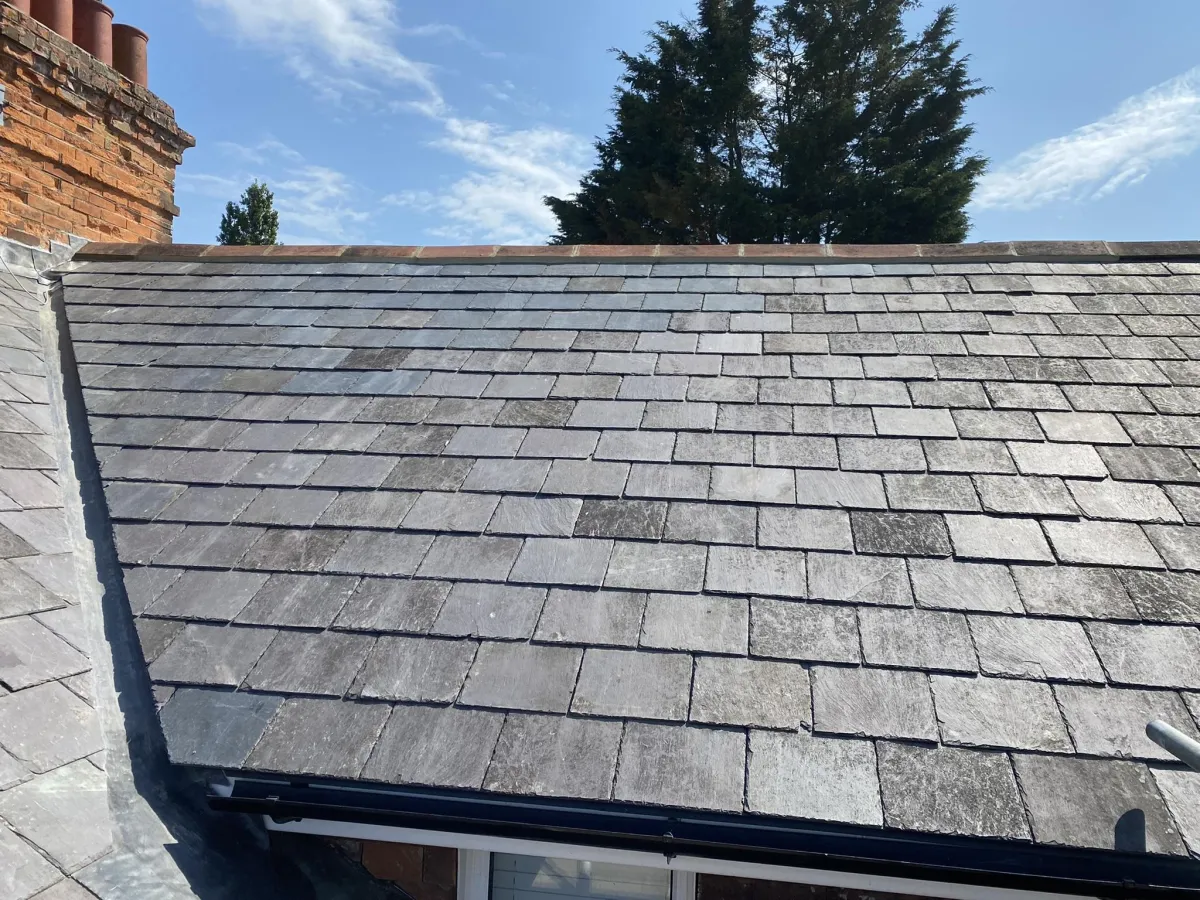
A leaking outbuilding roof over stored feed, machinery or animals is a different priority from a leaking domestic roof — the cost of delay compounds through spoiled stock or damaged equipment, not just discomfort. Where an outbuilding needs to be weathertight before winter sets in, this deadline should drive the programme even if it means phasing cosmetic or lower-priority work later.
Planning roof and structural repairs on outbuildings to complete before the wet season, rather than treating every building on the holding as equally urgent, keeps the real risk under control.
Common questions
Do agricultural buildings need building control approval like domestic ones?+
It depends on the specific building, its use and any structural changes involved — some agricultural structures fall under different rules to domestic construction. This should be checked building by building rather than assumed either way.
Can work be phased across a holding's buildings?+
Yes, and phasing by building — prioritising whichever is most urgent or most exposed to weather risk — is usually more practical than trying to run every building's works concurrently.
How does site access affect quoting?+
Long tracks, weight limits and shared yard access all affect delivery logistics and sometimes plant choice, so these should be discussed and reflected in the quote rather than assumed standard.
Get a building-by-building survey of your holding
We'll assess each structure on its own construction and condition and give you a phased, written quote that respects your working calendar.