
This question comes up constantly in small Kent terraces and semis with a single bathroom serving the whole household. The instinct is usually to rip the bath out for more shower room, and that instinct is right more often than not — but not always.
The case for keeping the bath
In family housing, a bath is still a strong expectation for buyers with young children, and its absence in the only bathroom can put off a portion of the market when you come to sell.
Bathing small children is genuinely easier and safer in a bath than in a shower, and a bath-shower combination — a bath with a shower over it — covers both needs in the same footprint if space is genuinely tight.
The case for going shower-only
Most adults in most households use the shower daily and the bath rarely, so removing the bath converts space that sits idle most of the week into a shower that gets used every single day.
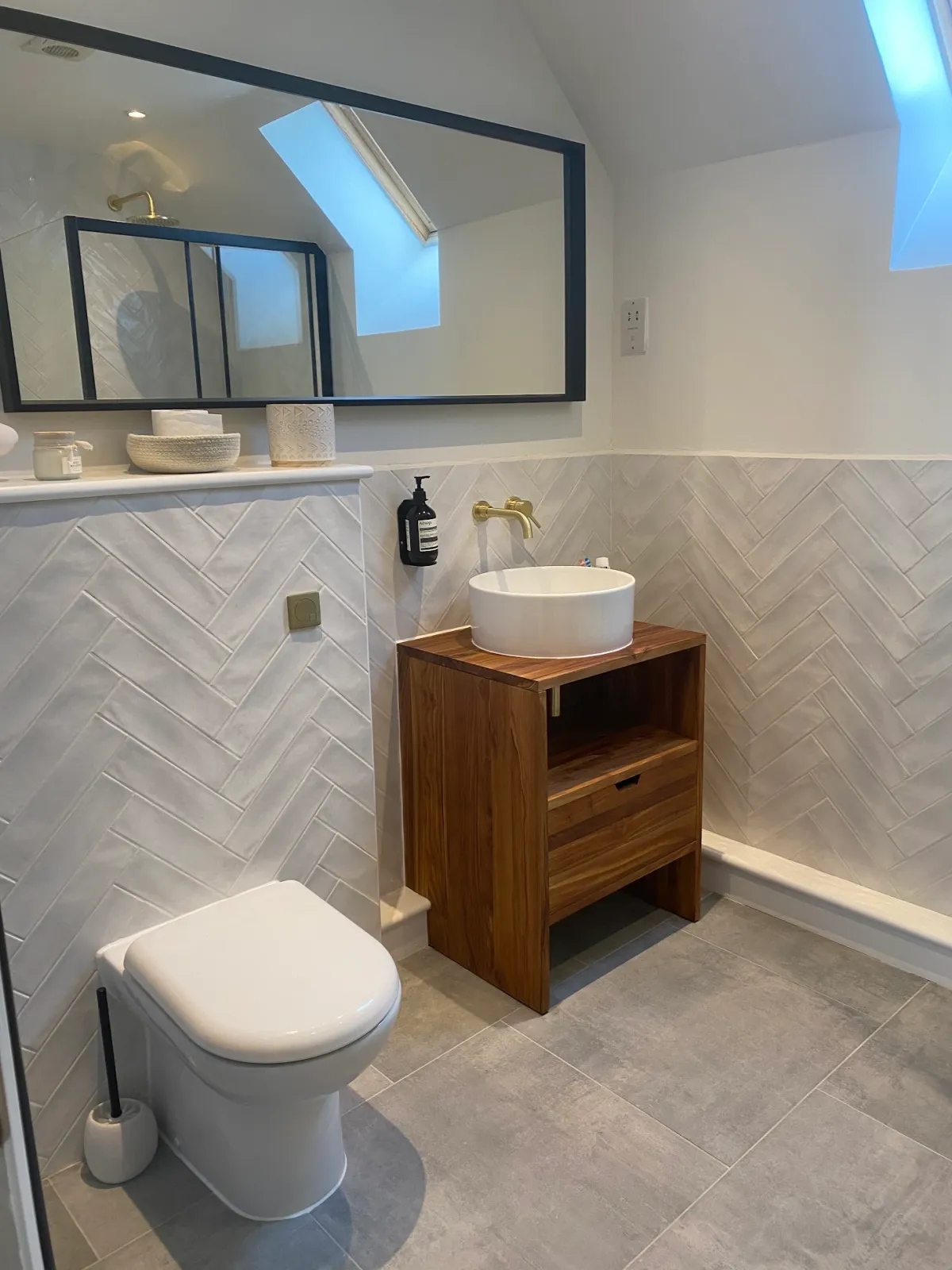
A shower-only bathroom, especially at a small size, can accommodate a genuinely larger and more comfortable shower enclosure or wet room area than a bath-shower combination ever allows, plus more usable floor space around the basin and WC.
How to weigh it for your household
If there are young children in the house or plans for them, or this is the only bathroom, think carefully before losing the bath entirely — a bath-shower combination is a reasonable middle path if a full bath and a full shower can't both fit.
If the household is adult-only, or there's a second bathroom elsewhere with a bath, going shower-only in this room is usually the better daily-use decision and rarely regretted.
Room-size thresholds that make the decision for you
Below a certain floor area, a bath, a WC and a basin simply won't all fit with usable circulation space between them, and no amount of clever layout changes that arithmetic — in that situation the bath has to go regardless of household preference.
Above that threshold, the decision genuinely is a preference rather than a constraint, which is why it's worth measuring the room properly before assuming either option is off the table.
What goes wrong with the wrong choice
Removing the only bath in a house with young children, then discovering how much harder bath time becomes in a shower tray, is one of the most common regrets we hear about after the event — it's worth testing this against the household's actual daily routine, not just the adults' preference.
Keeping a full-size bath purely for resale in a bathroom that's genuinely too small for it often means every other fitting is squeezed to the point of feeling cramped, which can put buyers off just as effectively as no bath at all.
Common questions
Does removing the only bath in a house affect its value?+
It can affect appeal to family buyers specifically, though the effect varies by area and property type. If this is the sole bathroom, it's worth weighing against your own likely selling timeline before deciding.
Is a bath-shower combination a good compromise in a small bathroom?+
Yes, it's a well-established compromise that gives you both functions in one footprint, though the shower experience is less generous than a dedicated enclosure or wet room of the same overall size.
What's the smallest bath that still functions properly?+
Shorter and shower-baths exist for exactly this situation, but check the internal bathing length against your household's actual needs rather than assuming any bath-shaped fitting will do.
Get advice on your small bathroom layout
We'll lay out both options to scale so you can see the real floor space each one gives you before deciding.