
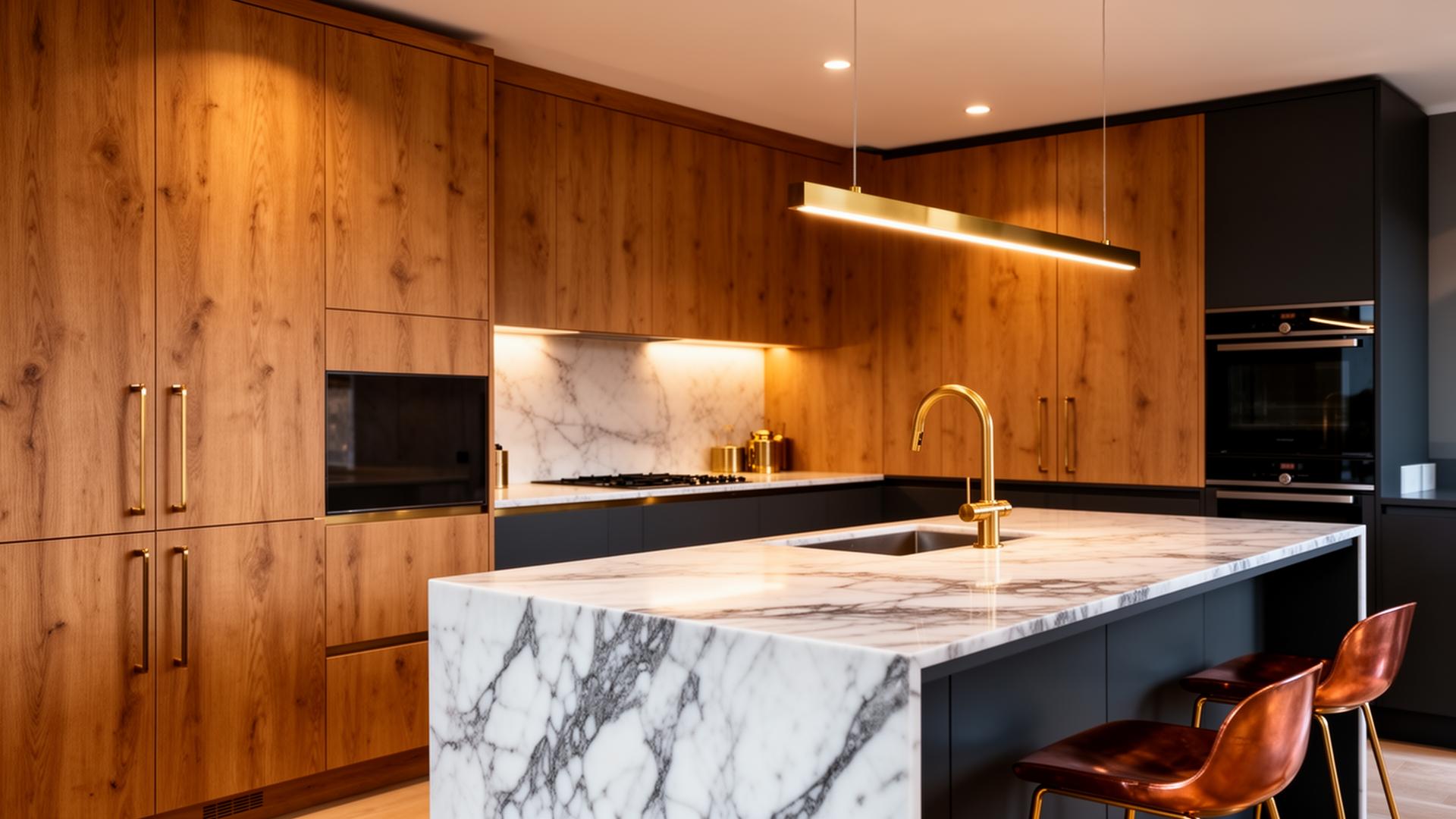
We get asked to quote both options on most kitchen enquiries, and the honest answer is that the kitchen itself decides it before we open the toolbox. This is a diagnostic decision more than a taste decision.
Check the carcasses before anything else
Open the doors and look at the carcass sides and base, particularly under the sink and around the dishwasher and washing machine. Swollen chipboard, delaminating edges or a soft base panel mean the carcass is failing structurally, not just cosmetically.
If the boxes are sound — square, dry, holding their fixings — the doors and worktop are simply the oldest-looking part of a kitchen that's otherwise fine underneath.
What a full refit changes that a refresh can't
A refit lets the layout change: moving the sink, repositioning appliances, opening up an island, or altering the run to suit a different family size. None of that is possible with a doors-and-worktop refresh, because it depends on the existing carcass positions staying put.
Electrics and plumbing typically get renewed during a full refit too, which matters if the current wiring or pipework is old enough to be a concern in its own right, separate from the kitchen's appearance.
What a doors-and-worktop refresh actually delivers
New doors, new worktop, new handles and often a new splashback transform the visible kitchen for a fraction of the cost and disruption of a full refit, typically completed in days rather than weeks.
Because the carcasses, plumbing and electrics stay in place, the household keeps a working kitchen for most of the job — a real consideration if there's no separate cooking space to fall back on.
The layout test
Even with sound carcasses, a refresh only makes sense if you're happy with the current layout. If the kitchen's shape has always bothered you — poor workflow, a cramped run, an awkward corner — a refresh will simply repaint over that frustration rather than solve it.
Common questions
How do I know if my kitchen carcasses are worth keeping?+
Look for swelling, delamination or softness at the base and around wet areas, and check the units are still square and securely fixed. If they pass that check, they're almost always worth keeping.
Can I change my worktop material during a refresh?+
Yes, this is one of the most common refresh upgrades — moving from laminate to quartz or solid timber, for instance — provided the new worktop's weight and fixing method suit the existing carcasses.
Will a refresh look as good as a full new kitchen?+
With good quality new doors, worktop and hardware, a refresh can look every bit as fresh as a full refit — the difference is entirely in the layout, which stays fixed.
Book a kitchen assessment
We'll check the carcasses on site and give you a straight recommendation, with a written quote for whichever route actually suits your kitchen.