
Before any of that, it is worth being clear about what is the developer's responsibility and what is yours.
Snagging versus improvement
Defects — poor finishes, doors that do not close, cracked seals, missing insulation — belong to the developer within the defects period, and should be reported and pursued rather than quietly fixed.
Improvements are yours. Mixing the two into one contract is what causes disputes about who caused what, so we keep them clearly separate.
The upgrades that get commissioned most
Fitted wardrobes and understairs storage, a proper utility or boot room, media walls and alcove joinery, converting a study into a working office with real acoustics, and a garden room or home office in the garden.
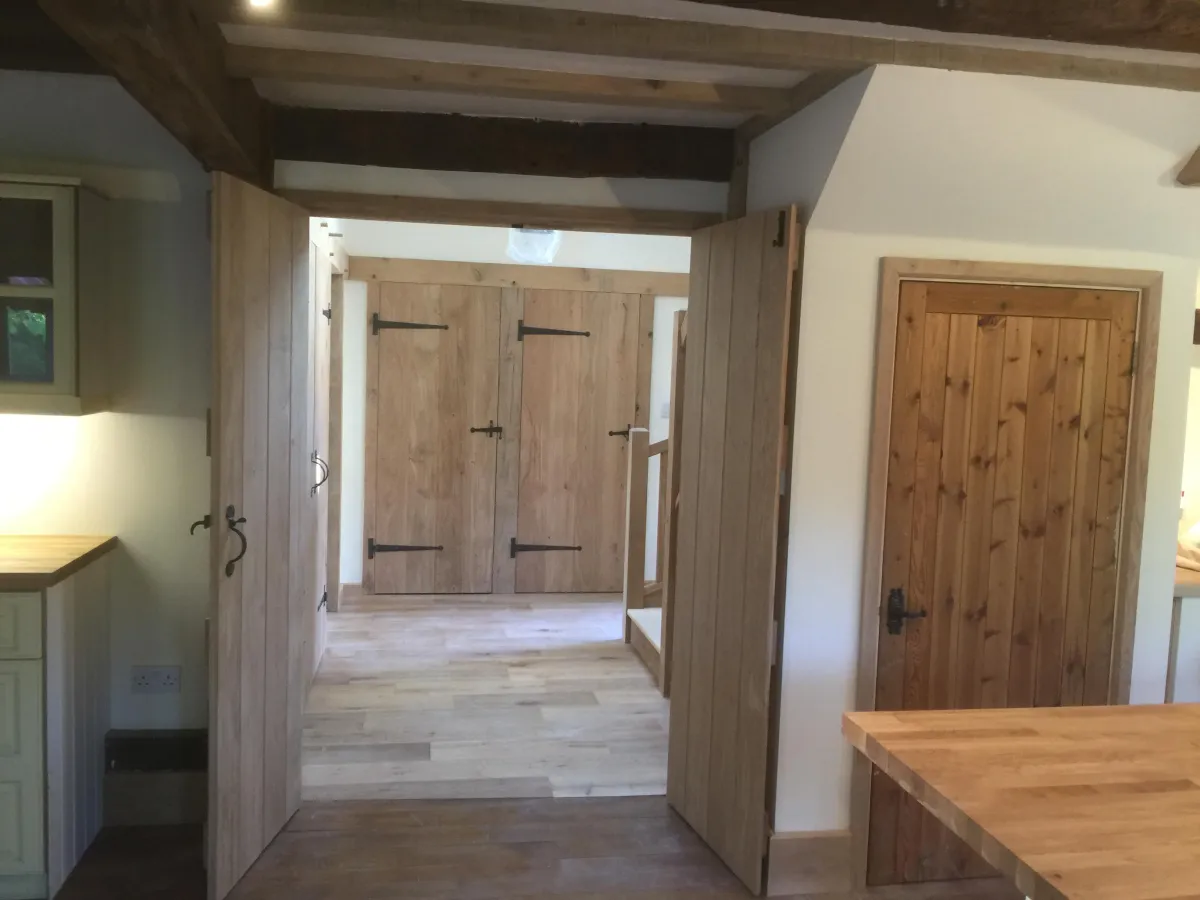
Because the fabric is new and square, joinery fits beautifully in these houses and installation is fast compared with period property.
Warranty and estate rules
Check the structural warranty terms before altering anything structural, and check for management company rules and estate covenants covering external changes, outbuildings, hard landscaping and parking.
First fix positions matter too. New houses often have limited socket and data provision, and adding them is much easier before decorating than after.
Common questions
Will altering my new build invalidate the warranty?
Structural alterations can affect cover, so check the terms first. Non-structural work such as fitted furniture normally does not, but keep the two separate from developer snagging.
Should I get snagging done before improvements?
Yes. Let the developer complete their obligations first so responsibility for defects stays clear.
Do I need permission for a garden office?
Often it falls within permitted development, but estate covenants and management company rules can be stricter than planning law.
Why do new-build rooms feel short on storage?
Storage is one of the first things trimmed from a developer specification. Bespoke joinery is the usual retrofit and makes a large difference.