
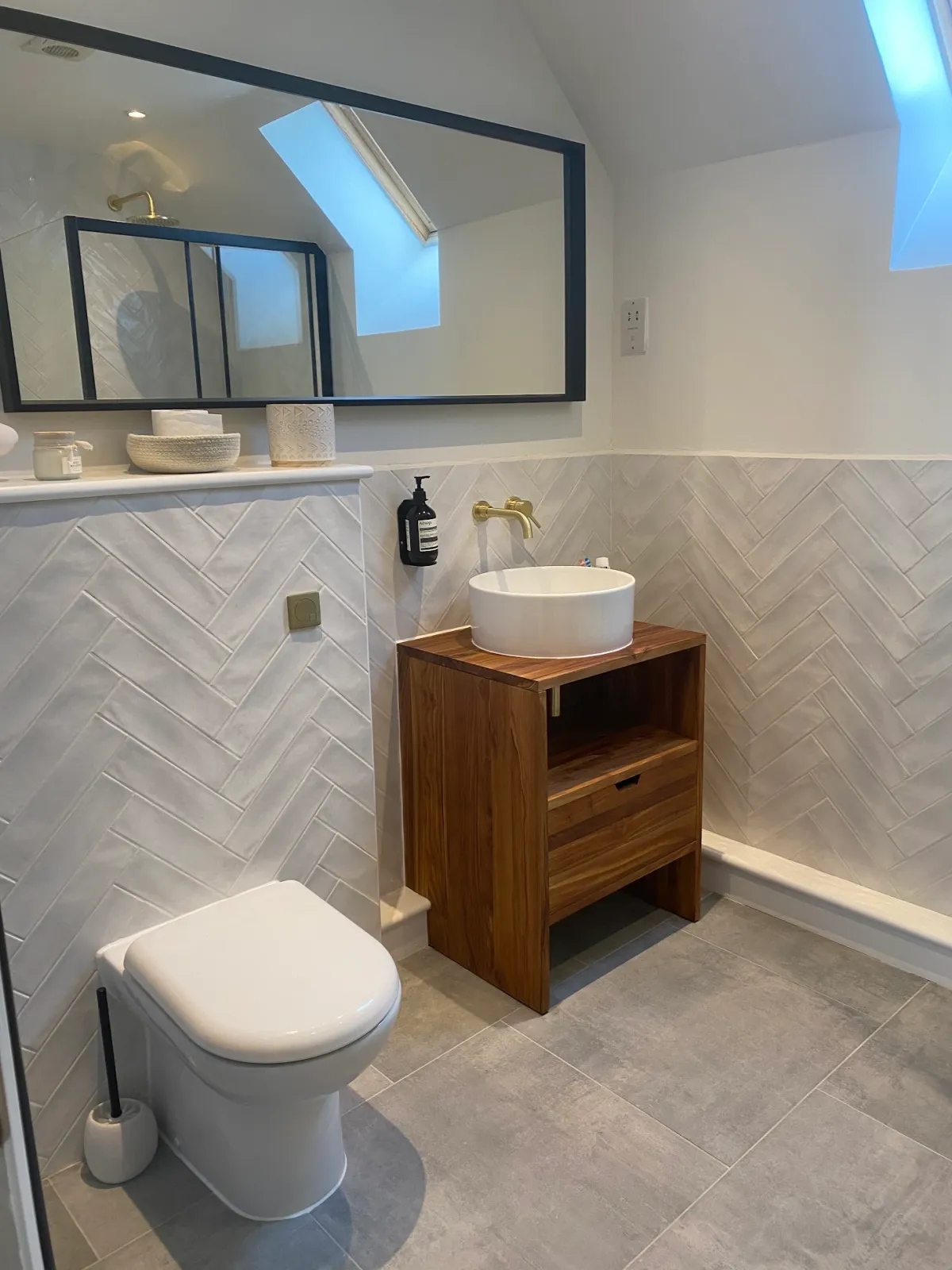
A rental refurbishment is judged on two things: how quickly the property is back on the market, and how it looks at the end of the third tenancy rather than the first.
That leads to different specification decisions from an owner-occupier job — not cheaper, but harder wearing and easier to repair in parts.
Specifying for durability
Rigid carcasses and replaceable doors, solid worktops, wipeable finishes, robust ironmongery and tiled or resilient flooring in wet areas all pay back in reduced maintenance calls.
Standardising on a small palette of finishes across a portfolio makes repairs quick and keeps spares meaningful, which shortens future voids.
Programme and void cost
The cost of an empty property is often larger than the difference between two specifications, so sequencing matters. Ordering long-lead items before the void starts and running trades in a tight sequence is where the money is saved.
We plan rental works around the void window and tell you honestly if a scope cannot be completed inside it.
Compliance work that runs alongside
Electrical condition reporting, gas safety, smoke and heat alarms, and fire door and escape provision in larger or shared properties usually need addressing at the same time as the cosmetic work.
Energy efficiency measures — insulation, heating controls, draught-proofing — are worth planning as part of the same visit rather than as a separate disruption later.
Common questions
What is the best flooring for a rental?
A durable resilient floor or good tiling in kitchens and bathrooms, with hard-wearing carpet or engineered board elsewhere. Ease of partial replacement matters more than initial cost.
How fast can a turnaround be done?
It depends entirely on scope and lead times. Ordering key items before the tenancy ends is the single biggest lever on the void period.
Should I upgrade the kitchen or just refresh it?
If the carcasses are sound, replacing doors, worktop and handles gives most of the visual gain for a fraction of the cost and time.
Do you work across multiple properties?
Yes, and standardising the specification across a portfolio makes future repairs faster and cheaper.
Do you carry out refurbishments for landlords?
Yes. We refurbish rental properties, from kitchens and bathrooms to full turnarounds, and quote at a fixed price in writing after a free site visit.