
Spraying a squirt of lubricant into a gap, or wedging a bit of card under a tread, will quiet a staircase for a week or two at best. Those joints are dry and loose because the timber has shrunk and the glue has failed — nothing about a spray or a shim changes that, and the noise comes straight back once things move again.
A repair that lasts goes back to first principles: the joints that were meant to lock the treads, risers and strings together need to be genuinely tightened, and that's best done from beneath if there's any access at all.
The sequence of a proper repair
Where there's no way to get underneath — a boxed-in staircase with no access at all — the fallback is to screw and pellet from above, drilling through the tread into the riser or string and plugging the hole with a matching timber pellet. It's a legitimate repair, just a less complete one than working from below, because it can't reach glue blocks or check the carriage.
- Gain access to the underside of the flight — through an existing cupboard, an access panel, or by carefully removing soffit boarding where the layout allows.
- Identify every loose wedge in the string housings tread by tread, rather than stopping at the first one found.
- Remove old, shrunk wedges and glue, clean the housing, and re-wedge with new timber glued and driven home tight.
- Refit or replace glue blocks under each tread-riser junction, using a structural adhesive rather than a general-purpose one.
- Check and, where necessary, re-fix the newel post connections at the top and bottom of the flight, since a loose newel undermines the stiffness of the whole run.
- Where the flight is wide and shows genuine deflection in the middle rather than just individual tread noise, add a central carriage from beneath to stiffen the whole width.
Why silencing from above doesn't hold
A common cosmetic approach is to find the exact spot that creaks and drive a single screw or nail through the tread into whatever's underneath, without opening anything up to see what's actually failed. It sometimes deadens that one noise, but it does nothing for the other joints on the flight that are in the same condition and haven't started creaking yet — they usually follow within a year or two.
It also risks masking a more significant problem. If the noise is coming from a genuinely undersized carriage flexing under load rather than a dry joint, no amount of surface fixing addresses that — the flight will keep bouncing even if it stops making noise.
Interfaces with other work
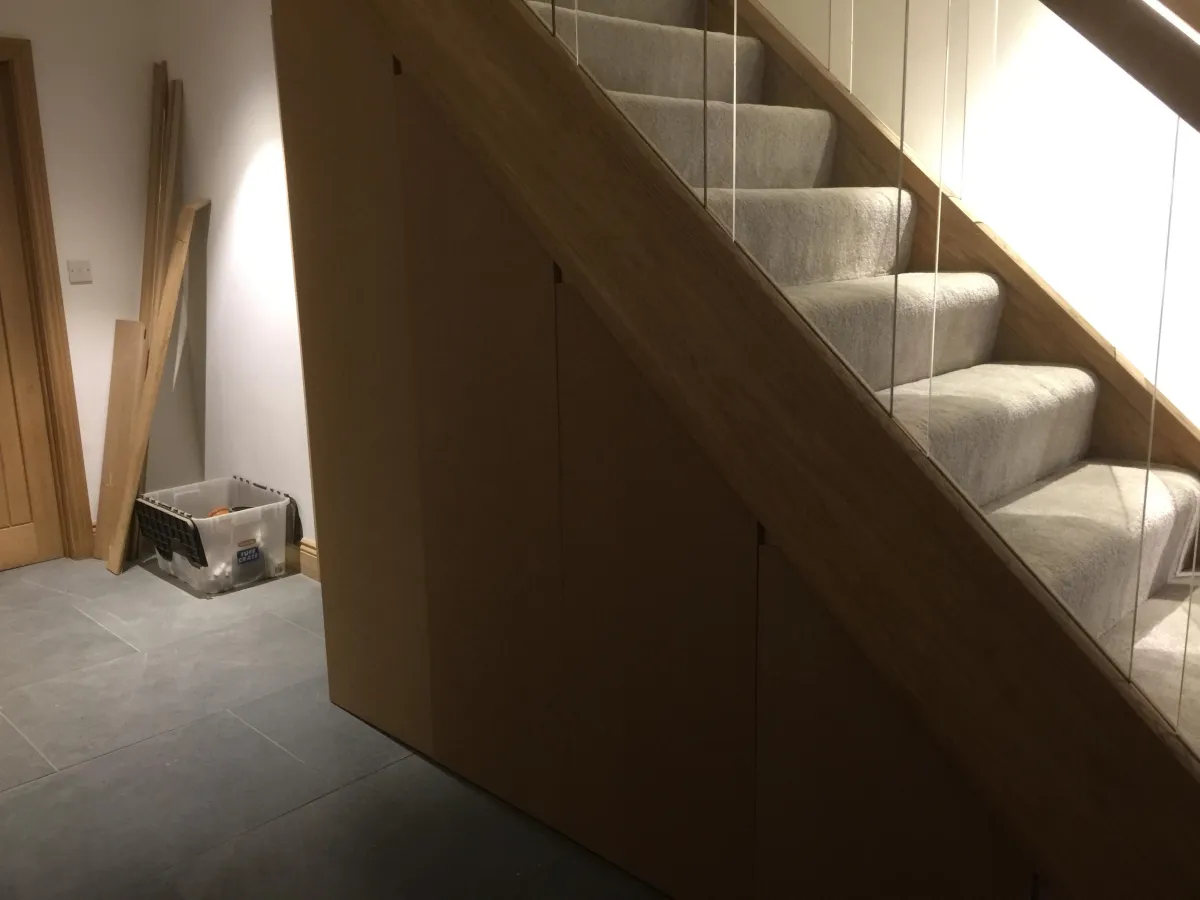
If the underside of the stairs is boarded in as a cupboard or storage area, that lining has to come off and go back on as part of the job — it's worth factoring that into the sequence if the space is in active use.
Where a newel post connects into a landing structure that's also been altered — for instance during a loft conversion — the repair needs to consider that connection as a whole rather than treating the newel in isolation. In cases where the staircase design or loading itself is in question, that assessment sits with a structural engineer before any repair work is carried out.
How you know it's actually fixed
A properly re-wedged and re-glued staircase should be silent under normal use across the whole flight, not just at the point that used to creak, and a wide flight should no longer show visible deflection when crossed at the centre. Because the fix addresses dried joints rather than papering over them, it should hold through the next change of season rather than needing to be revisited.
Common questions
Do you need to strip the staircase back to bare timber to fix it?+
No — the repair works through the existing joinery, re-wedging housings and refitting glue blocks without needing to remove treads, strings or finishes.
Is screwing from above ever an acceptable repair?+
Yes, where there's genuinely no access from beneath — it's a legitimate way to tighten a specific tread. It's just less complete than a from-below repair because it can't address glue blocks or an undersized carriage.
Will the repair change how the staircase looks?+
Working from beneath leaves the visible treads and strings untouched. Screwing and pelleting from above leaves small, fillable timber plugs in the tread surface, which can be finished to match.
Request a written quote
We assess access first, then quote for the from-below repair where it's possible, or the from-above alternative where it isn't.