
The Wealden clay that much of our patch is built on shrinks and swells significantly with moisture content, far more than sandy or chalky soils elsewhere in the county. Add mature trees — oaks and willows especially, both common in Kent gardens and hedgerows — drawing huge volumes of water from the clay in summer, and you have the classic combination behind clay shrinkage subsidence.
The diagnostic questions that matter
The pattern of a crack tells you more than its width. Diagonal cracking widening towards the top, tapering to a fine point at the bottom, running near a door or window opening, is the classic subsidence signature — it reflects the corner of the building rotating downward as the ground beneath one section shrinks more than the rest. Cracks that are uniform width top to bottom, or that appear suddenly rather than gradually, point elsewhere — often just thermal movement or a render defect.
Seasonal behaviour is the other tell. True clay shrinkage subsidence typically opens up through a dry summer and partially closes back up over winter as the clay rehydrates. A crack that's stable through both seasons, or one that opened suddenly after a specific event like nearby excavation or a leaking drain, points to a different cause entirely, and possibly not subsidence at all.
- Diagonal cracking, wider at the top, near openings — classic subsidence pattern
- Seasonal opening and partial closing — points to clay shrinkage rather than a one-off event
- Sudden appearance with no seasonal pattern — often something else, such as a leaking drain or thermal movement
Monitoring before anyone digs anything
Genuine suspected subsidence is monitored before any remedial work is specified — glass tell-tales or precision monitoring studs fixed either side of a crack, measured at intervals over several months to establish whether movement is ongoing, seasonal and stable, or progressive. Digging up foundations or installing underpinning without this evidence is expensive and can be entirely unnecessary if the movement turns out to be historic and long since stopped.
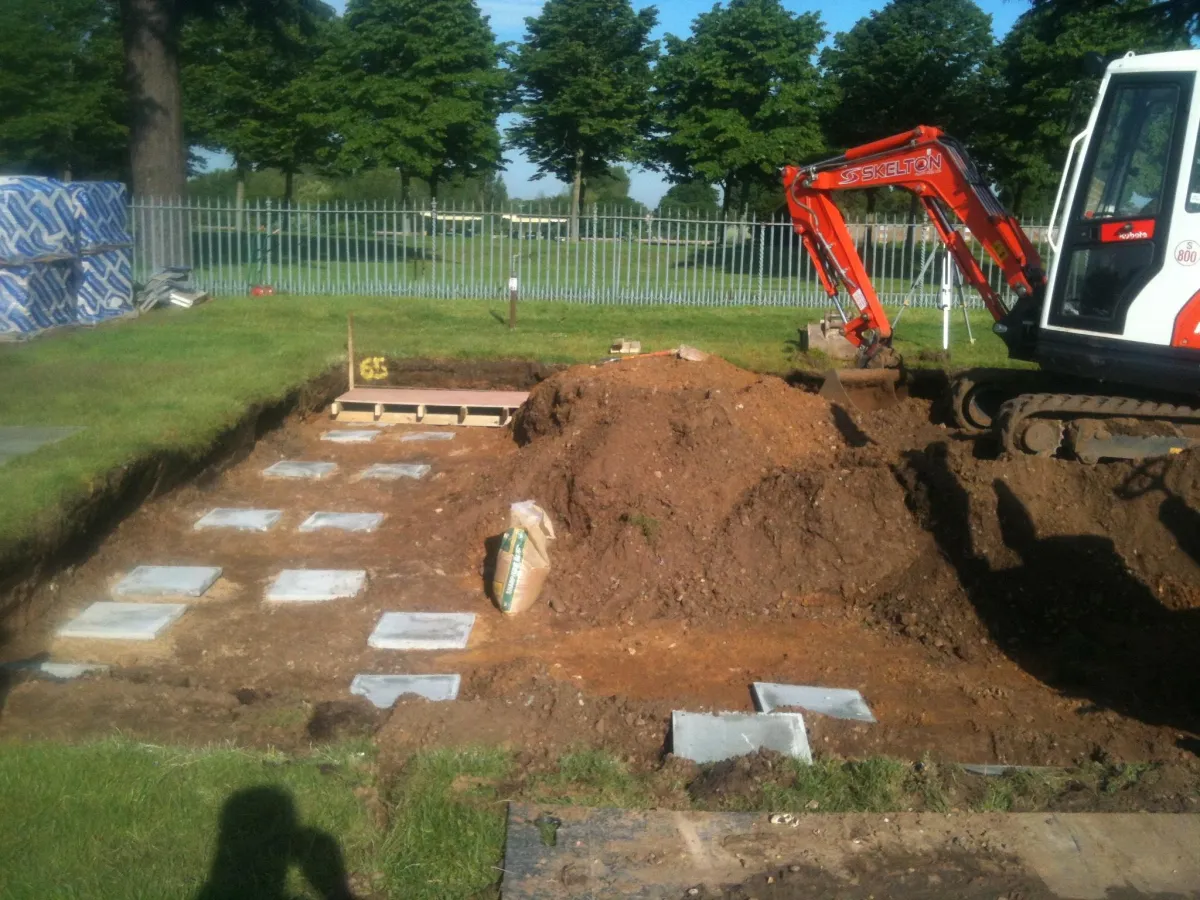
A trial pit is usually dug alongside monitoring, to inspect the existing foundation depth and the soil condition directly beneath it, and to identify tree roots if they're suspected to be involved. This combination — crack pattern, monitoring data, and trial pit findings — is what a structural engineer uses to reach an actual diagnosis rather than a guess.
The insurance route
If subsidence is confirmed, most buildings insurance policies cover it, and the process runs through the insurer's own loss adjuster and appointed engineer rather than being commissioned privately from scratch. It's worth notifying your insurer as soon as you have a genuine concern rather than waiting, since claiming after work has already started can complicate or invalidate cover.
The insurer's process typically includes the monitoring period described above, root or drainage investigation if a tree or leak is implicated, and — only if underpinning is genuinely justified — appointment of a specialist contractor to carry it out, usually with the insurer meeting the cost subject to policy excess.
Removing the cause, not just the symptom
Underpinning treats the symptom — an inadequate or compromised foundation — but if a tree root is the actual driver, felling or significantly reducing the tree's water demand (through crown reduction or removal, done in line with any Tree Preservation Order or conservation area consent needed) is often part of the fix, sometimes instead of underpinning altogether if the movement is caught early enough.
A leaking drain saturating and washing out fines from the soil beneath a foundation is another common and entirely fixable cause that has nothing to do with underpinning — repairing the drain and monitoring afterwards may be the whole solution.
Mass concrete underpinning versus piled underpinning
Traditional mass concrete underpinning involves excavating in short sections beneath the existing foundation, down to a stable bearing stratum below the depth affected by clay shrinkage or tree root influence, and filling each section with concrete to extend the foundation deeper. It's proven, relatively straightforward, and suits situations where a firm bearing layer is reachable at a practical depth.
Piled underpinning — needle beams supported on piles bored or driven down to a much deeper stable stratum — is used where the required depth for mass concrete would be impractical, where access is restricted, or where ground conditions mean deep excavation by hand isn't viable. It's more specialist and more expensive but avoids the extensive excavation mass concrete needs.
The choice between the two comes down to ground investigation findings, not preference, and is specified by the engineer running the scheme rather than chosen on cost alone — though cost and disruption are real factors in adopting one recommendation over another where both would work.
What life on site looks like during underpinning
Underpinning is disruptive — excavation close to and beneath the existing foundation, working in short sections to avoid destabilising the wall above, and a project timeline typically measured in weeks rather than days depending on the extent of the affected wall. It's specialist work we coordinate closely with the engineer and, where insurance-funded, the loss adjuster, rather than a job we'd recommend a general builder start without that oversight in place.
Common questions
Does every diagonal crack mean subsidence?
No. Diagonal cracking near openings is the classic pattern but plenty of cracks share that shape without genuine ongoing subsidence behind them — the crucial extra evidence is monitoring data showing whether it's actively moving and how it behaves through the seasons.
How long does subsidence monitoring take?
Typically a minimum of several months, often stretched across a full seasonal cycle from summer through winter, to see how the crack behaves as ground moisture changes. Rushing this stage risks either missing genuine ongoing movement or unnecessarily commissioning underpinning for a crack that would have stabilised on its own.
Will my insurance premium go up if I claim for subsidence?
It can, and a property with a confirmed subsidence history sometimes needs to disclose this to future insurers or buyers even after remedial work is complete, which is worth being aware of before deciding how to proceed — though leaving genuine subsidence untreated is a worse outcome for both safety and future saleability.
Can I remove a tree myself if it's suspected to be causing subsidence?
Check first whether it has a Tree Preservation Order or sits within a conservation area, both common across Kent's villages, since unauthorised removal can carry serious penalties. Your engineer or the insurer's arboriculturist will usually recommend the appropriate action and help with any necessary consent.
Is underpinning always necessary once subsidence is confirmed?
No — if the cause is identified and removed early (a leaking drain repaired, a tree's water demand reduced) and monitoring then shows the movement has stopped, repointing and cosmetic repair may be all that's needed. Underpinning is reserved for cases where the foundation itself needs strengthening to prevent further movement.