
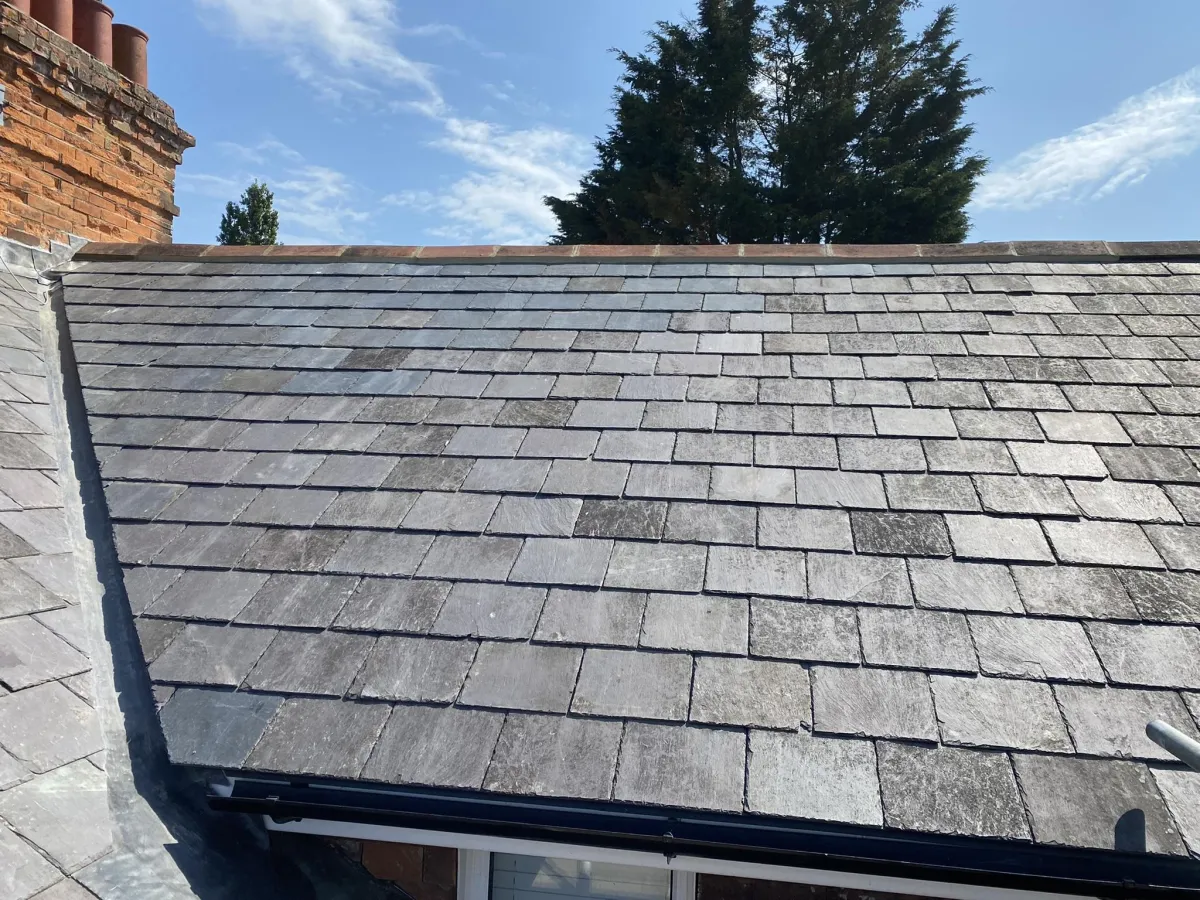
Energy-Efficient Loft Conversion in Tunbridge Wells — EPC Uplift & Running Costs
An energy-efficient loft conversion in Tunbridge Wells isn't the same job as it was five years ago. Fabric-first thinking, air-tight detailing, MVHR, low-carbon heating — the specification is mature now, and the running-cost savings are real. On a TN1, TN2, TN3, TN4 property, done properly, you're looking at £300–£600 off the annual heating bill and an EPC lift of 10–15 SAP points.
Fabric-first specification for a Tunbridge Wells low-energy loft conversion
The specification below is what we quote as "low-energy" on Tunbridge Wells projects. It exceeds current Building Regs on every fabric element and lines up with Future Homes Standard.
- • Roof insulation: 300mm+ mineral wool at ceiling + 150mm PIR between rafters (U-value 0.11)
- • Air-tightness: 3 m³/(h·m²) at 50Pa target — half current regs
- • MVHR system with ducted supply / extract
- • Triple-glazed rooflights (U-value 0.9)
- • LED throughout, wiring pre-configured for heat pump control
Running-cost numbers for Tunbridge Wells
We run heat-loss and SAP calculations on every low-energy Tunbridge Wells project so the running-cost savings are actual numbers, not sales copy. Real payback for TN1, TN2, TN3, TN4 stock:
- • Additional up-front cost vs regs minimum: 8–15%
- • Annual heating bill reduction: £300–£600
- • Simple payback: 8–12 years at 2026 energy prices
- • EPC lift: 10–15 SAP points
- • MEES-compliant if let (EPC E now, C by 2028–2030)
- • Sale-price uplift: ~2–3% for EPC B or A (estate agent data)
Heat pump readiness on Tunbridge Wells projects
Not every Tunbridge Wells property is ready to swap a gas boiler for an air-source heat pump today — but every project we do can be heat-pump-READY at no extra cost. That means low-temperature emitters, larger radiator sizing, hot-water cylinder rather than combi, and cable / pipe routes reserved for the future indoor unit. When the boiler eventually fails, the swap is a day, not a rip-out.
Where Tunbridge Wells's conservation constraints change the spec
Around Pantiles and the Tunbridge Wells conservation area, some low-energy solutions are off the table — EPS render on a Wealden cottage is a non-starter. We shift to internal wood-fibre insulation, breathable lime plaster on original walls, and slim triple-glazing that satisfies conservation officers. The result is comparable running-cost improvement without harming the building.
The catch: it costs 8–15% more up front vs Building Regs minimum spec. Most of that comes back inside 8–12 years on today's electricity prices, faster if the Tunbridge Wells property is ever let (MEES) or sold (EPC C by 2028–2030 is the direction of travel).
Tunbridge Wells's Pantiles Georgian terraces, Victorian villas, Edwardian semis housing stock changes the approach — you can't wrap a listed Wealden cottage in EPS render, and you shouldn't. Every low-energy loft conversion we run in Tunbridge Wells is designed around the fabric that's already there.
Tunbridge Wells design FAQs
Is a low-energy loft conversion in Tunbridge Wells worth the extra cost?
Yes on any project you'll own for 8+ years, or any BTL you plan to hold through MEES tightening. 8–12 year payback at today's prices, faster if energy prices rise. And EPC C-ready future-proofs a rental.
Can you fit a heat pump as part of the loft conversion?
Only if the Tunbridge Wells property is genuinely suitable — well-insulated shell, adequate hot-water cylinder, appropriate outdoor unit location. We won't fit one that won't perform. But we design every Tunbridge Wells low-energy project so a future heat pump is a same-day swap when the current boiler fails.
Will fabric-first spec make my Tunbridge Wells listed / conservation project harder to approve?
Actually the opposite — conservation officers welcome breathable, reversible energy upgrades on historic fabric. It's foam-and-membrane approaches that get refused. We spec accordingly on every Tunbridge Wells listed job.
What EPC rating can we realistically achieve?
On a structural project in Tunbridge Wells, EPC B is achievable on most TN1, TN2, TN3, TN4 stock — A on new-build extensions with heat pump plus PV. We model it before we quote.
Low-energy loft conversion for your Tunbridge Wells home
Fabric-first spec, running-cost model, heat-pump-ready design, EPC uplift built into the quote. Free 30-minute site visit.
Related guides
In short
A low-energy loft conversion in Tunbridge Wells costs 8–15% more up front, saves £300–£600/year, lifts EPC by 10–15 SAP points, and future-proofs against MEES and rising energy prices. We design fabric-first, conservation-sympathetic, heat-pump-ready.
Ready to price your loft conversions in Tunbridge Wells?
Free site visit, fixed-price written quote and a 5 year workmanship guarantee — backed by 40+ years on the tools and our workshop in Biddenden.
"We had our loft insulated and boarded. From start to finish the process was smooth, professional and stress-free. Malcolm upgraded the insulation and …"